Evolution of Aquarium Design
To celebrate Ocean Month, CambridgeSeven aquarium experts revisit the idea of Aquarium Trends, focusing on sustainability, resiliency and the incorporation of technology into aquarium exhibits.
View Post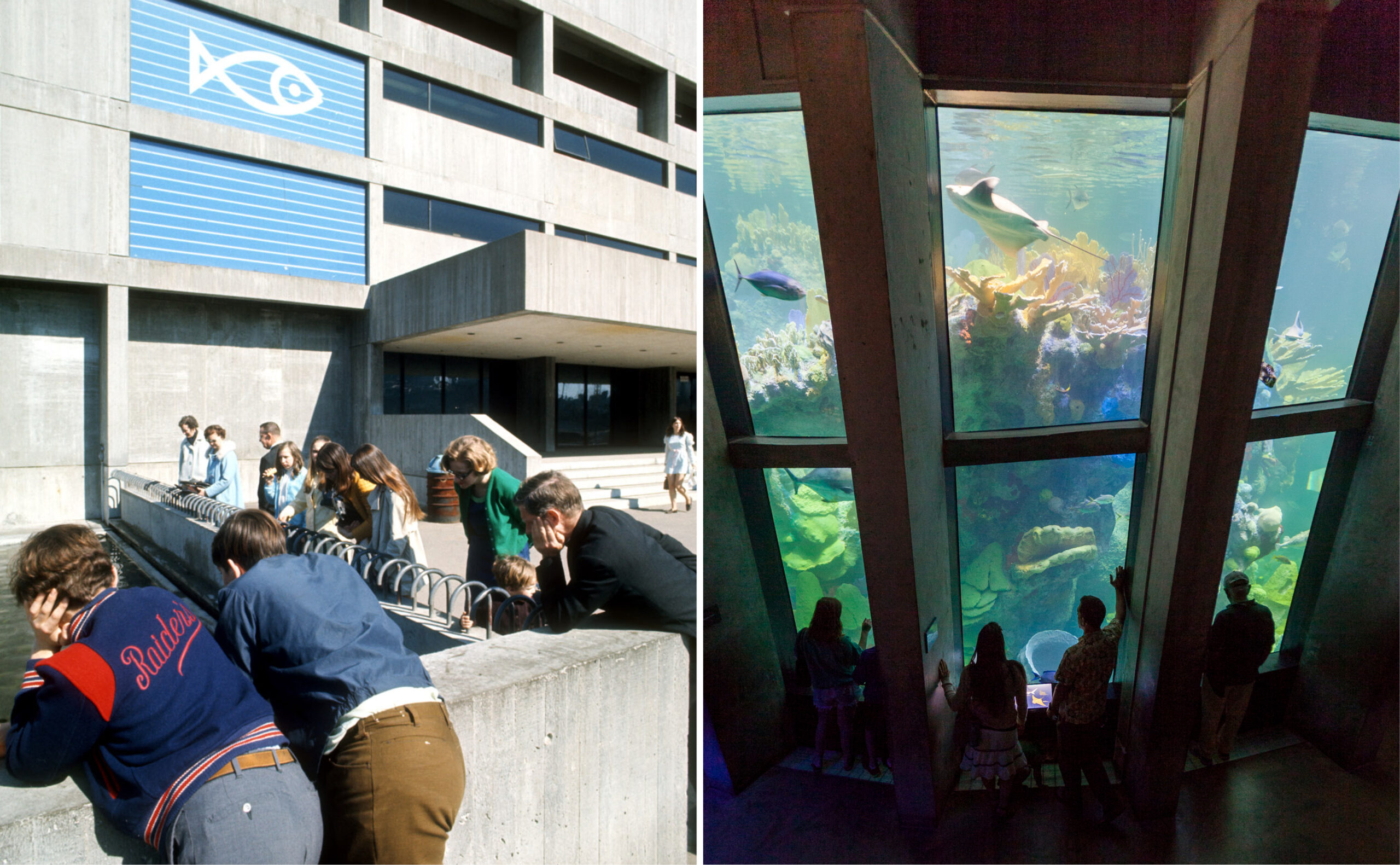
In 1962, CambridgeSeven embarked on a journey that would help redefine the way people experience the natural world. Our first major project, the New England Aquarium in Boston, challenged conventional ideas about what an aquarium could be. Rather than presenting aquatic life as a collection of individual specimens in traditional display tanks, the design introduced a revolutionary approach: an immersive journey into underwater habitats, allowing visitors to experience the wonder, diversity, and interconnectedness of ocean life.
At the heart of this vision was the Giant Ocean Tank, a dramatic, multi-story exhibit that brought visitors into an entirely new relationship with the underwater world. When the aquarium opened in 1969, it established a new model for aquarium design that would influence institutions around the world.
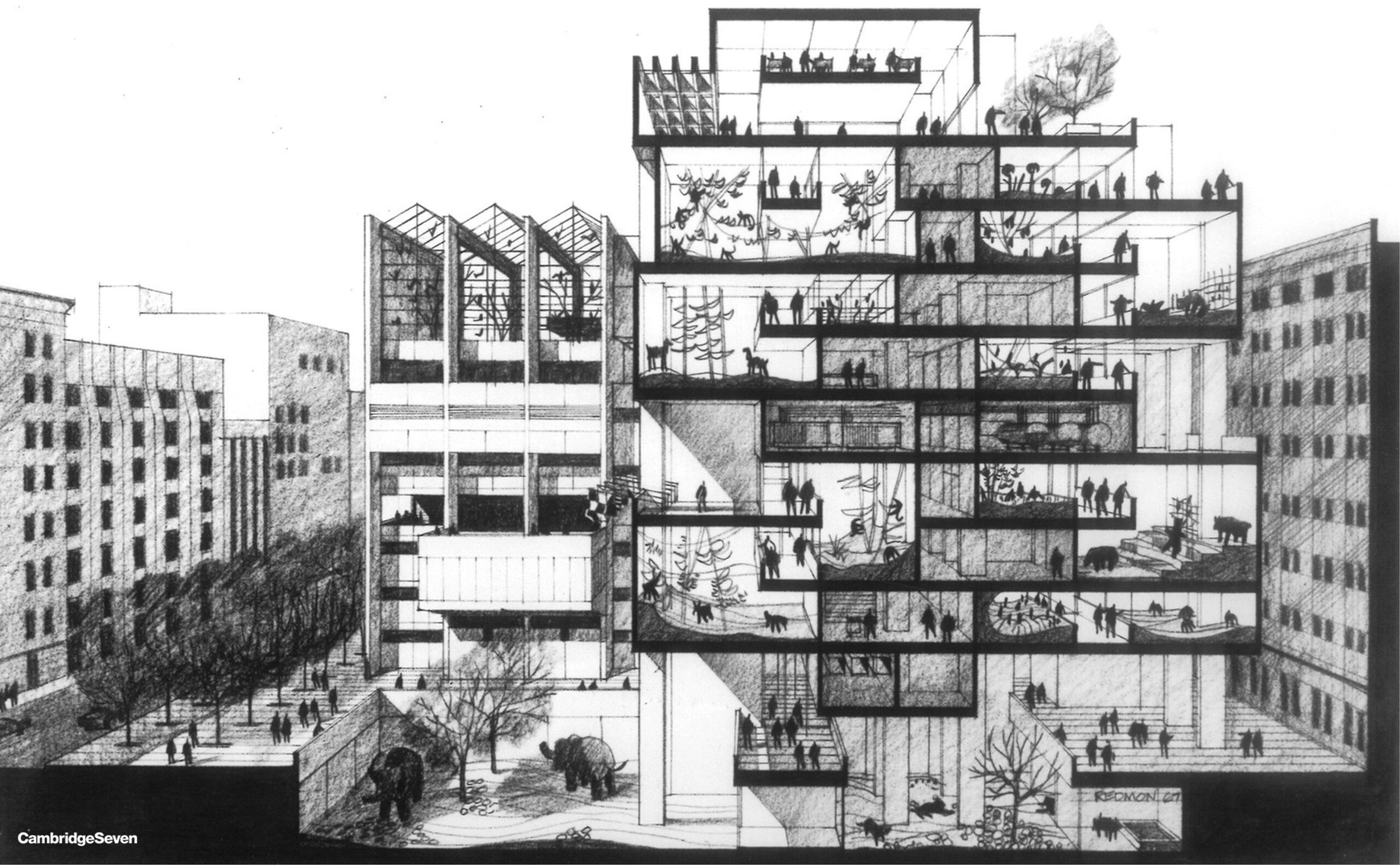
During these early years, CambridgeSeven was also exploring unconventional approaches to zoo design, including the Vertical Zoo. This innovative concept challenged traditional thinking about how animals could inhabit architectural environments and how vertical space could create new relationships between animals, habitats, and visitors. The central conceit of the Vertical Zoo was to bring wildlife into the city center and place it in interior habitats within a skyscraper. Practicality withstanding, the notion was that wild and urban life are not mutually exclusive and that creating bridges between city and country, humans and animals, is essential for the well-being of both.
The 64 years since CambridgeSeven’s founding have witnessed a profound transformation in how society understands and cares about wildlife. The publication of Rachel Carson’s Silent Spring in 1962 helped launch the modern environmental movement, raising public awareness of the consequences of human activity on natural ecosystems. The growth of the animal rights movement further challenged traditional practices in the keeping and exhibition of animals.
Zoos and aquariums have evolved in response to these changing expectations. Once primarily regarded as places for recreation and the display of exotic animals, they have become important centers for animal care, scientific research, species preservation, and conservation education. Advances in veterinary medicine, animal behavior, and welfare science have fundamentally changed how habitats are conceived and operated.
The Association of Zoos and Aquariums (AZA) has played an important role in this transformation. Through its accreditation program, animal care standards, Species Survival Plans, and conservation initiatives, AZA has helped establish a framework for excellence in animal welfare and responsible wildlife stewardship. Its standards extend well beyond the physical requirements of an enclosure to address the animals’ behavioral, social, psychological, and environmental needs.
Today, the best zoological institutions begin with a different question: What does an animal need to thrive? Contemporary habitat design considers not simply the physical environment, but also an animal’s ability to exercise choice and express natural behaviors. This concept of animal agency translates into environments that offer opportunities for retreat and social interaction, varied landscapes, climbing structures, changing microclimates, and choices between active and quiet spaces. Architects and designers work closely with keepers, veterinarians, and animal welfare specialists to create environments that support the physical and psychological health of their residents.
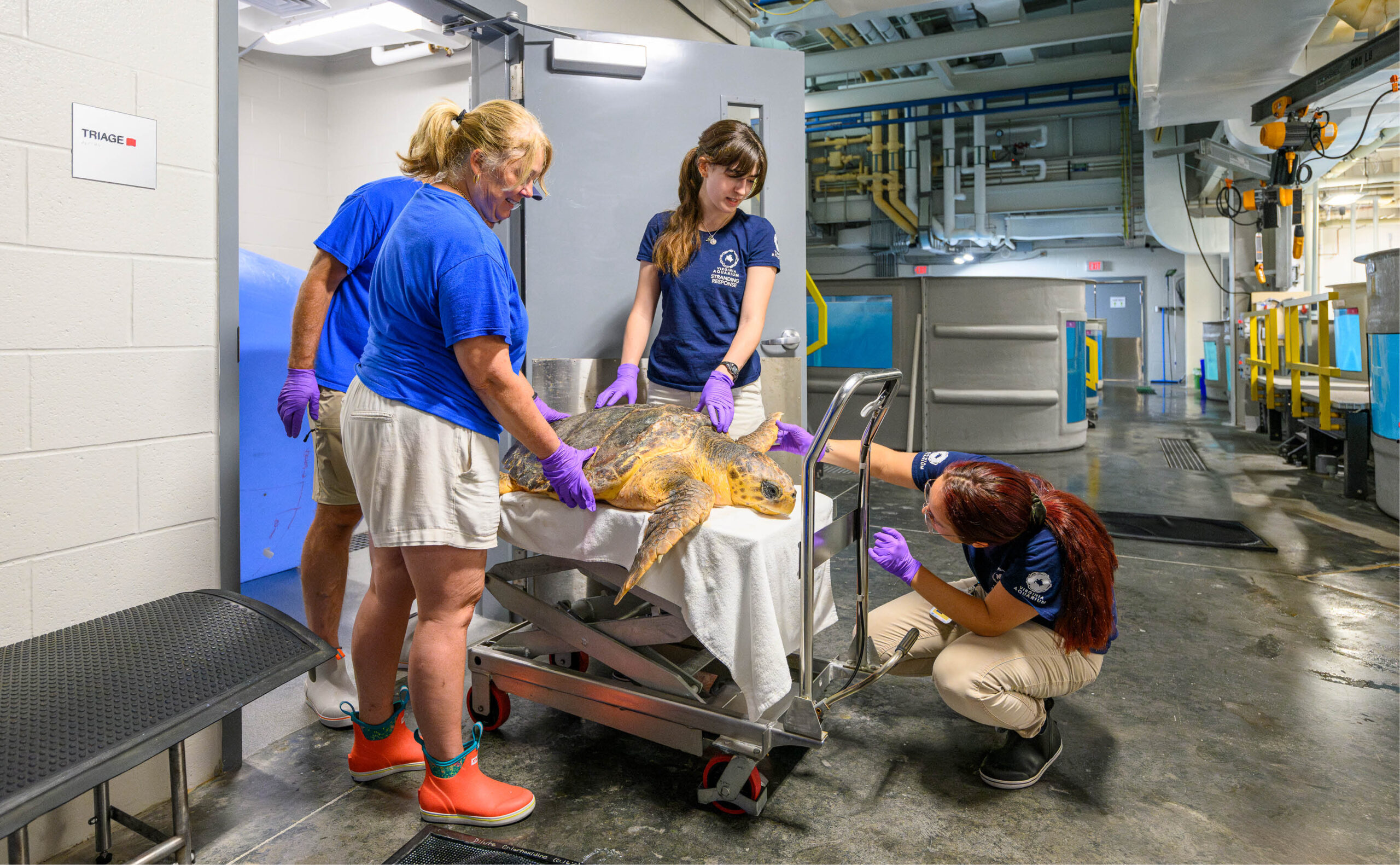
This evolution has also transformed the mission of zoos and aquariums. AZA-accredited institutions are important participants in species recovery, scientific research, habitat restoration, and public advocacy for conservation. They connect millions of visitors to the natural world and help communicate why protecting wild places, preserving biodiversity, and maintaining healthy ecosystems are essential to our future. Public-opinion research by AZA has also reinforced the important role of these institutions as trusted voices in conservation and environmental education.
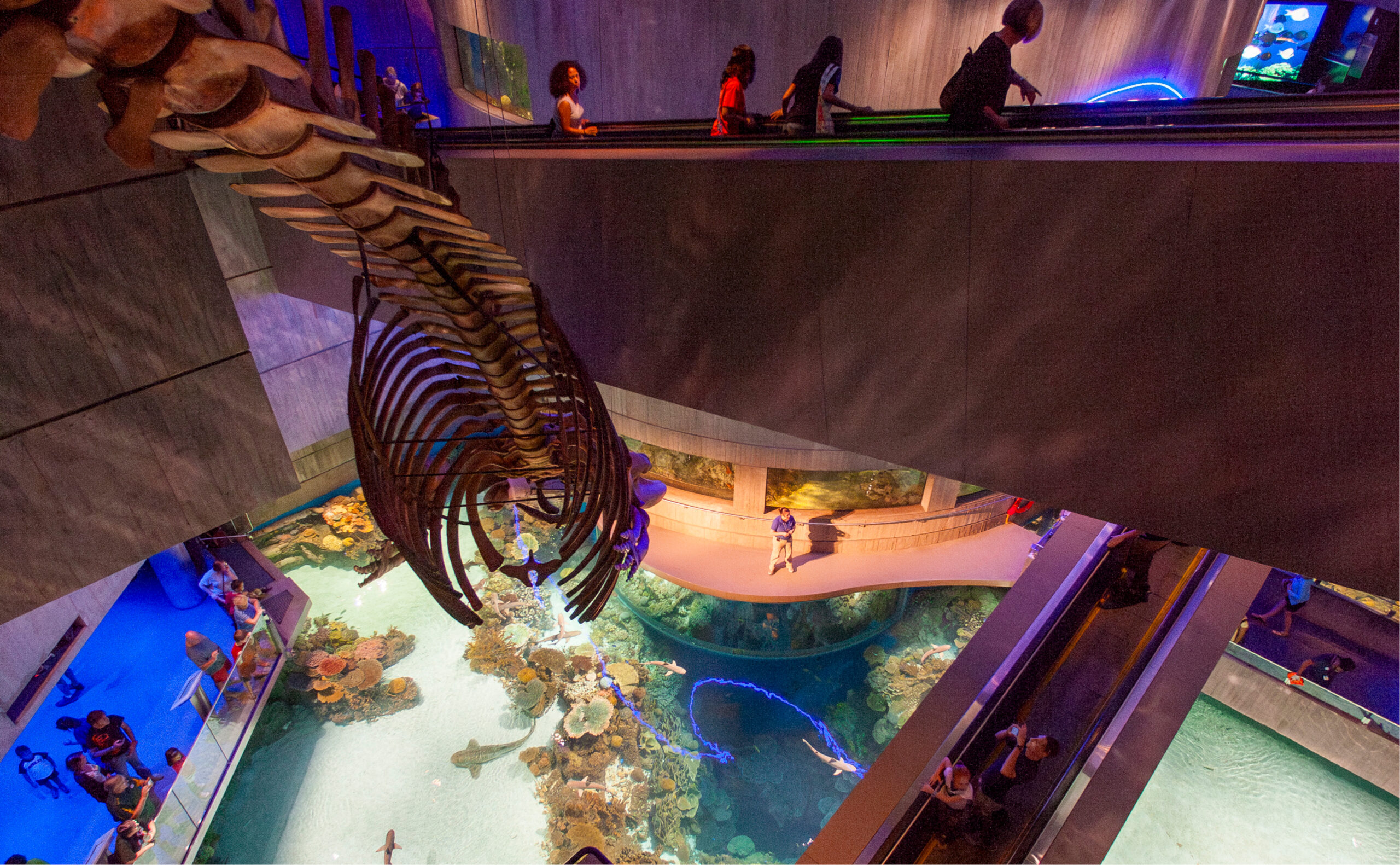
CambridgeSeven’s history is closely intertwined with this evolution. Following the New England Aquarium, our work at the National Aquarium in Baltimore continued to advance the immersive aquarium experience, bringing visitors into closer contact with the extraordinary diversity of aquatic life. The National Aquarium further redefined the aquarium experience, transforming it from a collection of individual tanks into an immersive journey through aquatic ecosystems. A spiraling visitor path organized around a dramatic central atrium created a distinctive rhythm between intimate exhibit experiences and expansive shared spaces.
Bridges and balconies overlooking the central dolphin pool provided visual connections throughout the building, while exhibits organized around complete environments—from Atlantic coral reefs and California kelp forests to coastal tidal pools—replaced traditional displays organized by species. The journey culminated in a sunlit, multi-level tropical rainforest beneath the building’s distinctive glass pyramids. Equally important, the aquarium’s sculptural architecture became a landmark on Baltimore’s Inner Harbor, helping establish the waterfront as a destination and contributing to the city’s revitalization.
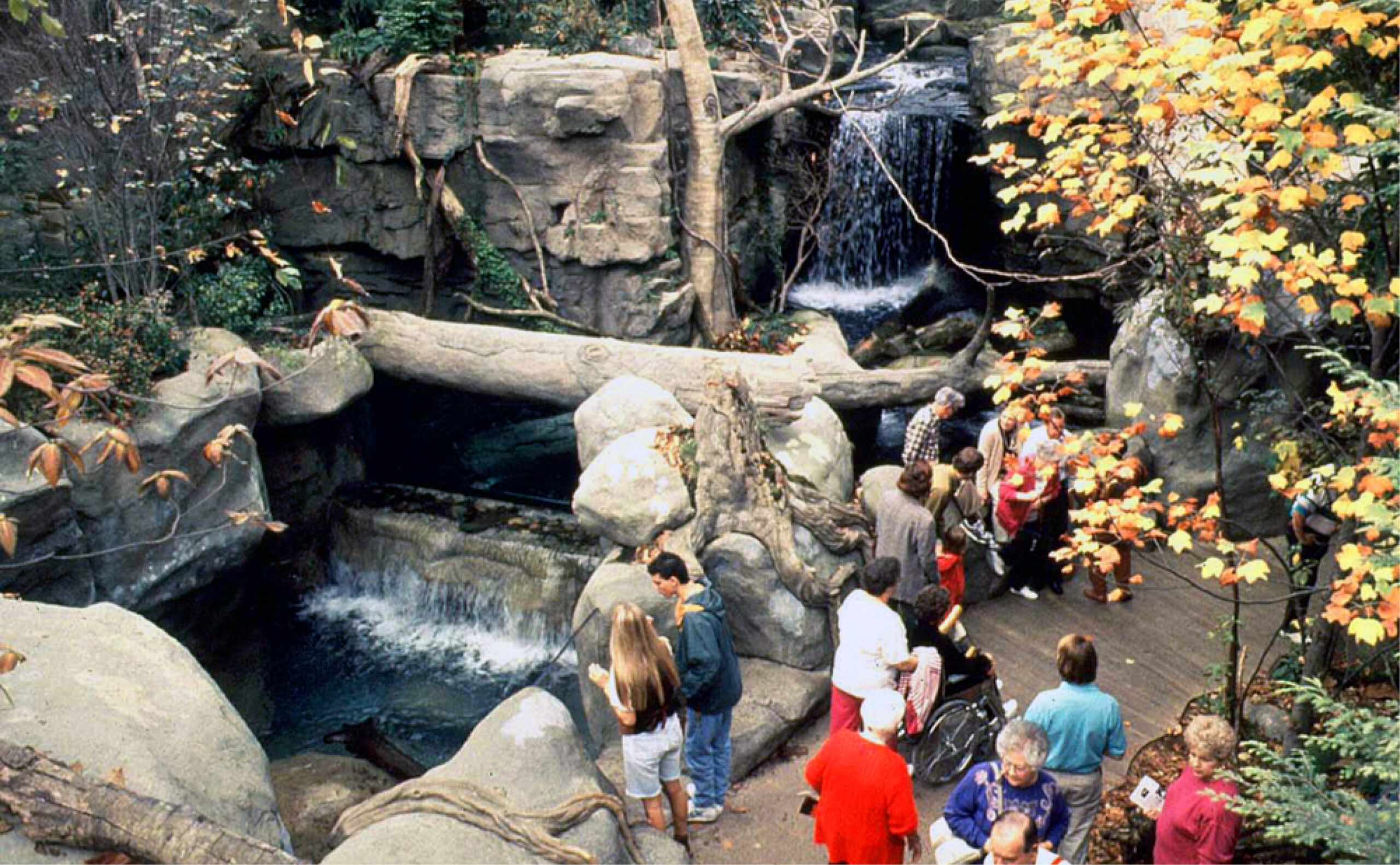
The Tennessee Aquarium in Chattanooga, which opened in 1992, represented another significant departure from conventional aquarium design. Rather than focusing primarily on ocean environments, the aquarium celebrated the extraordinary biodiversity of freshwater ecosystems. Its innovative Mountains-to-the-Sea narrative traces the ecological journey of water from Appalachian mountain streams through the Tennessee River system to the Mississippi Delta and ultimately the Gulf of Mexico. By featuring native flora and fauna and exploring the relationship between human development and watershed health, the aquarium made conservation more immediate and personally relevant. The building itself became a catalyst for the revitalization of Chattanooga’s industrial waterfront.
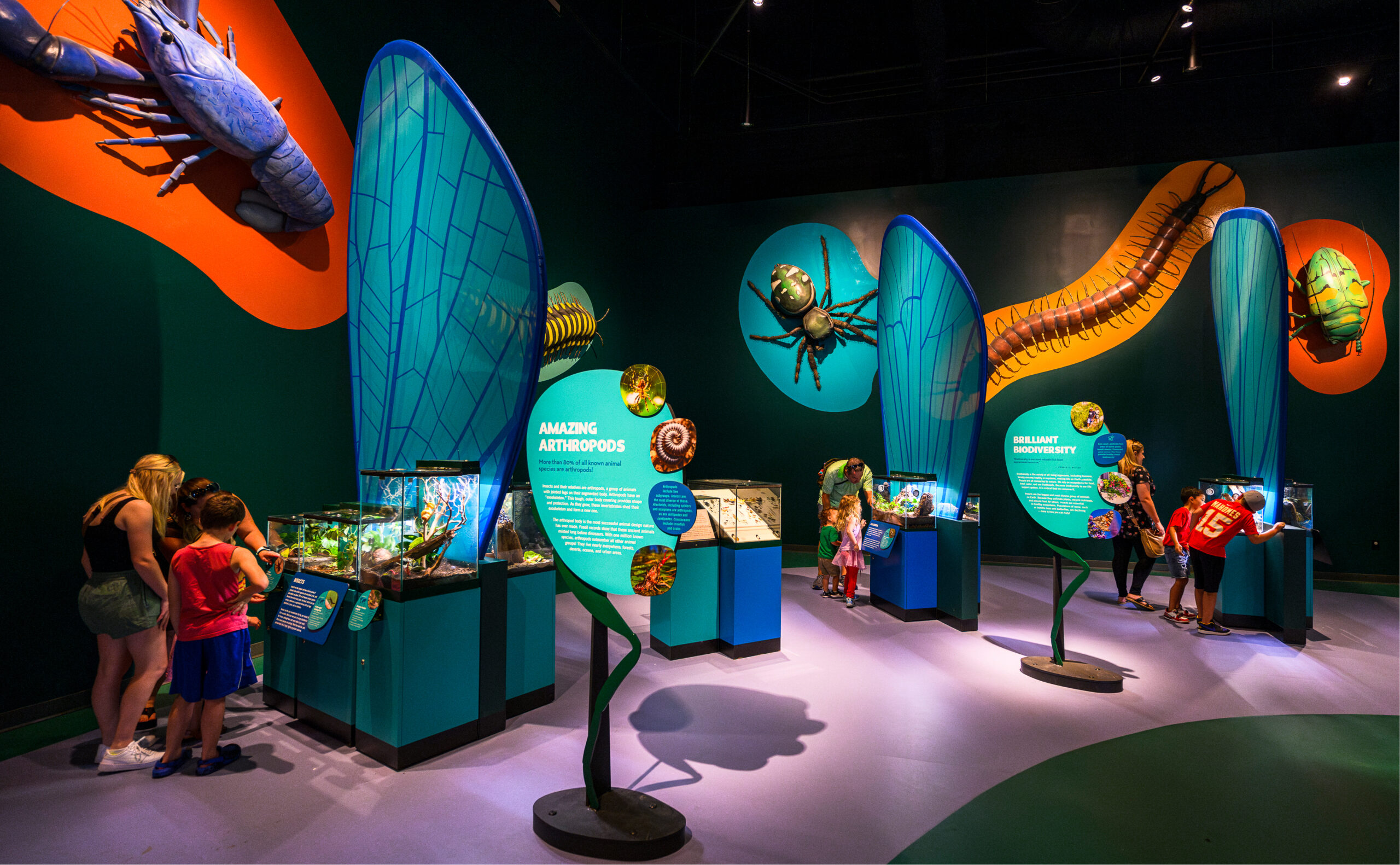
Our subsequent work at the Audubon Aquarium and Insectarium in New Orleans continued this exploration of the relationship between architecture, exhibit design, and environmental storytelling. Our work at Audubon sets a new standard for how existing facilities can be revitalized by deploying the axiom, reduce, reuse, recycle, as guiding design principle. The new Audubon reduces its carbon footprint by eliminating 23,000 square feet of building space that required heating and cooling, refurbishing and reinterpreting legacy exhibits with a new narrative, and repurposing old tanks for new exhibits and animals.
Through these projects, we have continually sought to integrate architecture, landscape, lighting, graphics, media, and interpretation to create experiences that are both memorable and meaningful, and now more importantly with greater reliance on sustainability.
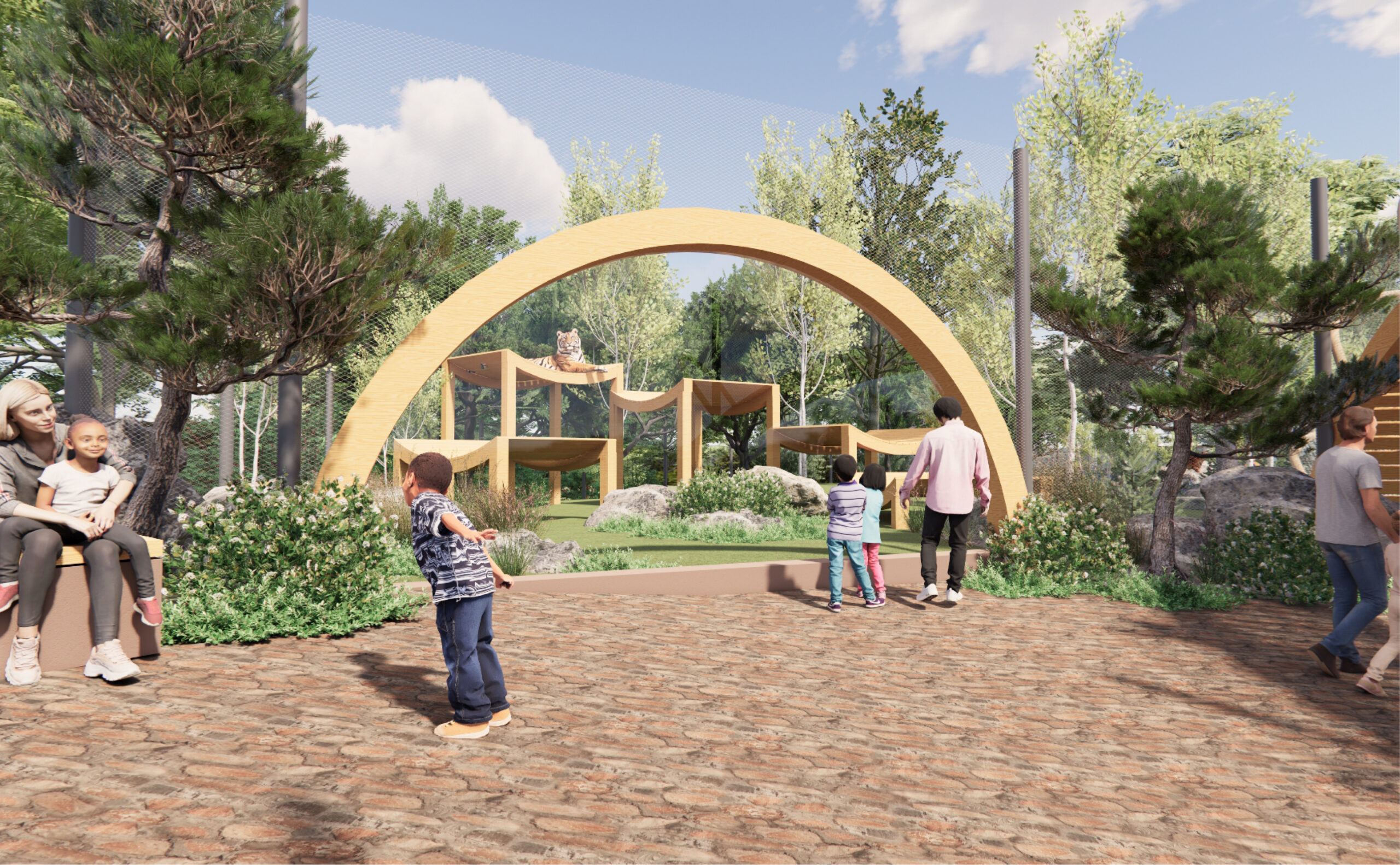
Our recent feasibility study for a new Amur tiger habitat at the Seneca Park Zoo provides a particularly compelling example of how contemporary animal-welfare principles shape architectural design.
Developed in collaboration with the zoo and Monroe County, the study began with the AZA Tiger Care Manual and the specific behavioral and husbandry requirements of the species. Rather than starting with a visitor exhibit and fitting the animals into it, the design team approached the project from the perspective of the tigers and their keepers.
The proposed habitat creates approximately 26,000 square feet of interconnected animal environments, including two expansive outdoor habitats, an off-exhibit area, and a dedicated holding facility. The landscape draws inspiration from the Amur tiger’s native environment, incorporating natural vegetation, varied terrain, boulders, climbing opportunities, and water.
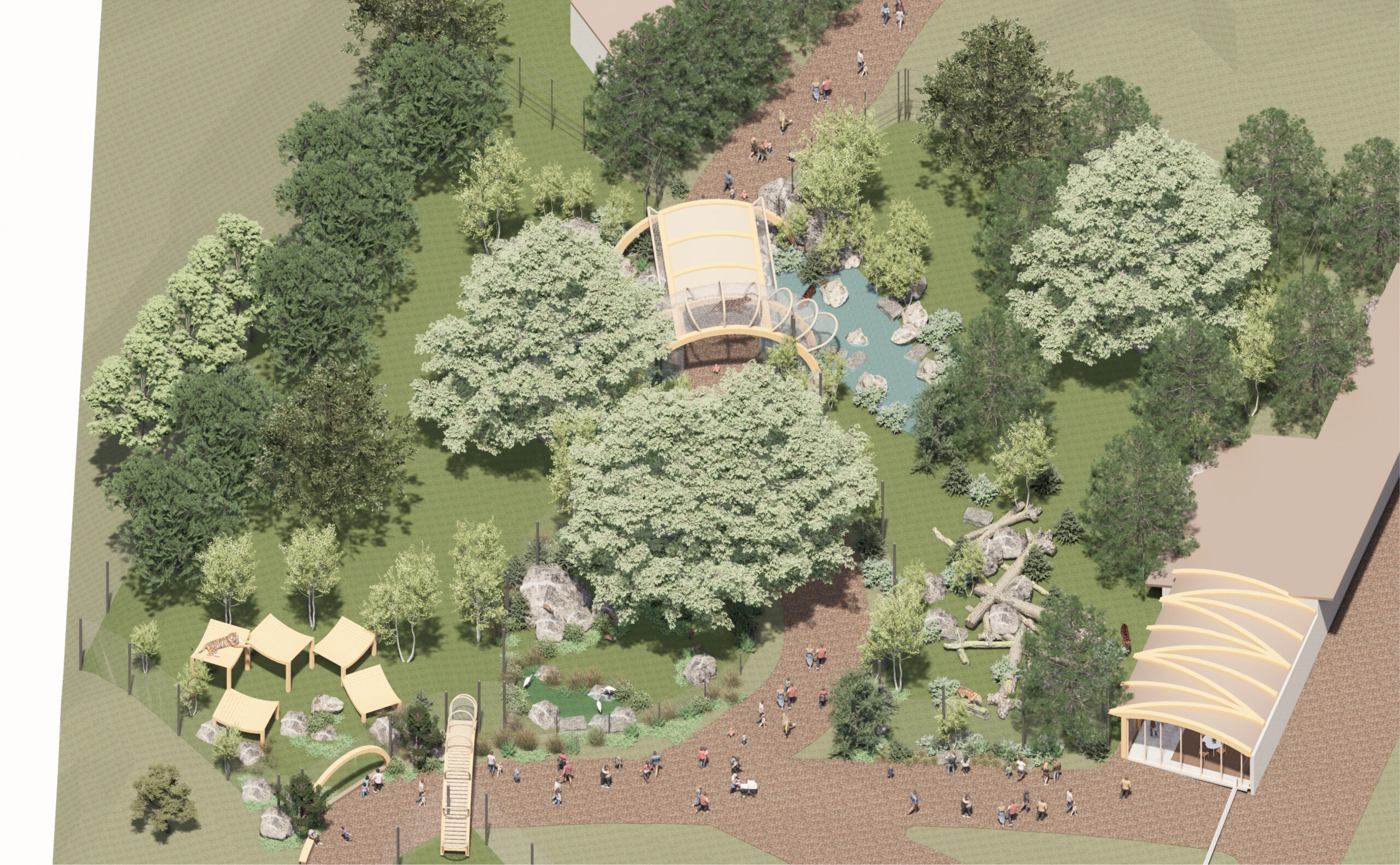
The design is organized around providing animals with choices. A substantial swimming pool offers both shallow access and deeper water. Repurposed fallen trees and boulders create opportunities for climbing, exploration, and enrichment. A warming crag provides different thermal environments, while natural landscape features allow tigers to retreat from one another and from public view. Multiple interconnected spaces allow animals to move between habitats, while providing keepers with the ability to separate individuals, manage social groupings, and conduct animal transfers without unnecessary restraint or immobilization.
These are not simply landscape amenities. They are fundamental components of an environment designed to support natural behaviors, physical health, and psychological well-being. The holding building, veterinary access, keeper work areas, and animal-management systems are equally important parts of the design.
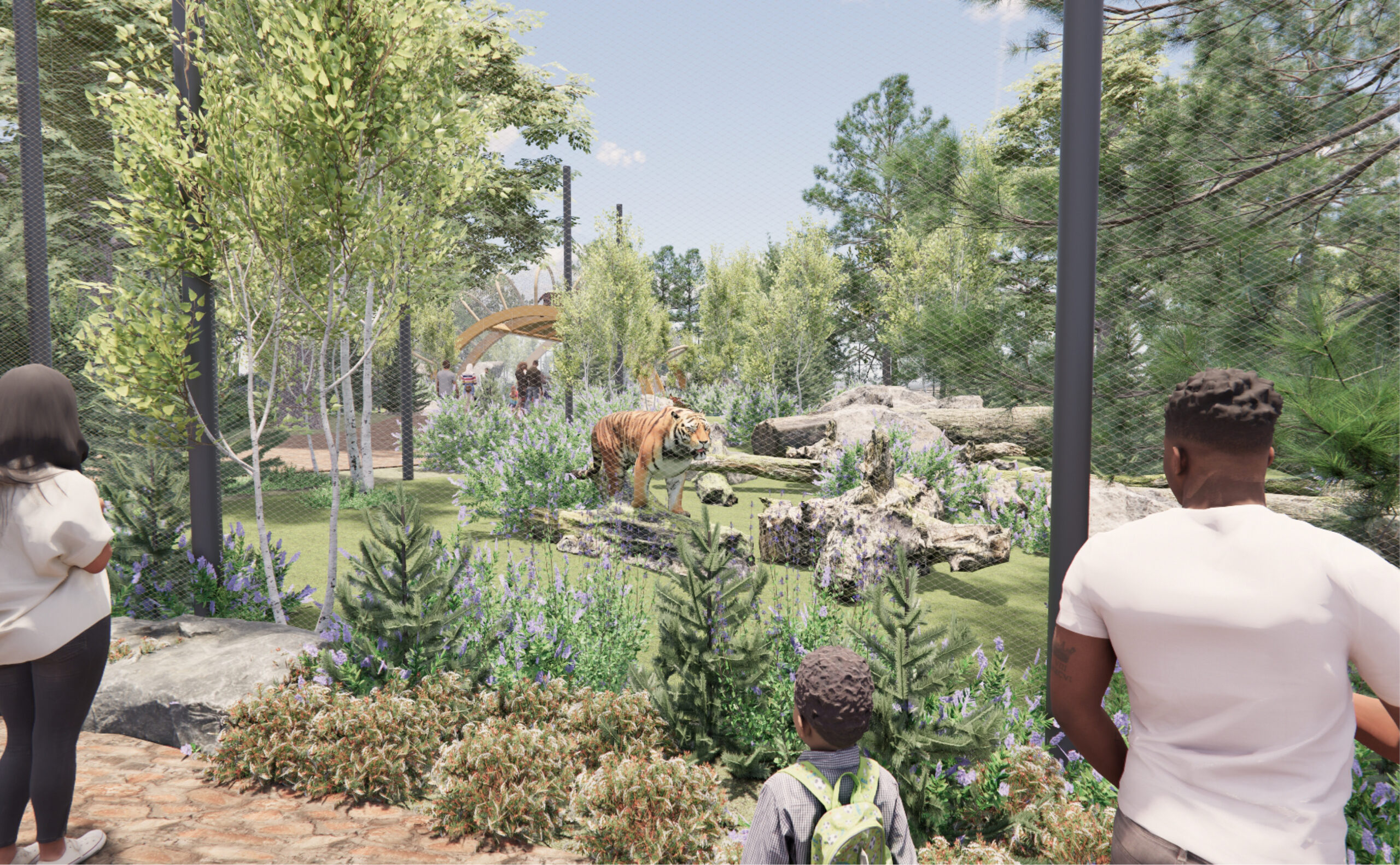
The project also rethinks the visitor experience. An elevated tiger crossing bridge, carefully positioned viewing shelters, and opportunities to observe the animals swimming, climbing, and exploring create memorable encounters without making constant public visibility the priority. Visitors experience the tigers within a richly layered landscape rather than as animals on display.
This is an important distinction in contemporary zoo design: the best visitor experiences are often those that begin with the needs of the animals. When animals have the space and freedom to express natural behaviors, visitors have the opportunity to observe something far more meaningful than an animal on display. They encounter a living habitat.
This evolution continues at the Tropics Building and Main Entry Plaza at the Seneca Park Zoo. Here, animal health and welfare are central to the architectural and engineering response. The challenge is particularly demanding: creating a year-round tropical environment for animals and plants in Rochester’s cold climate while reducing energy consumption and environmental impact.
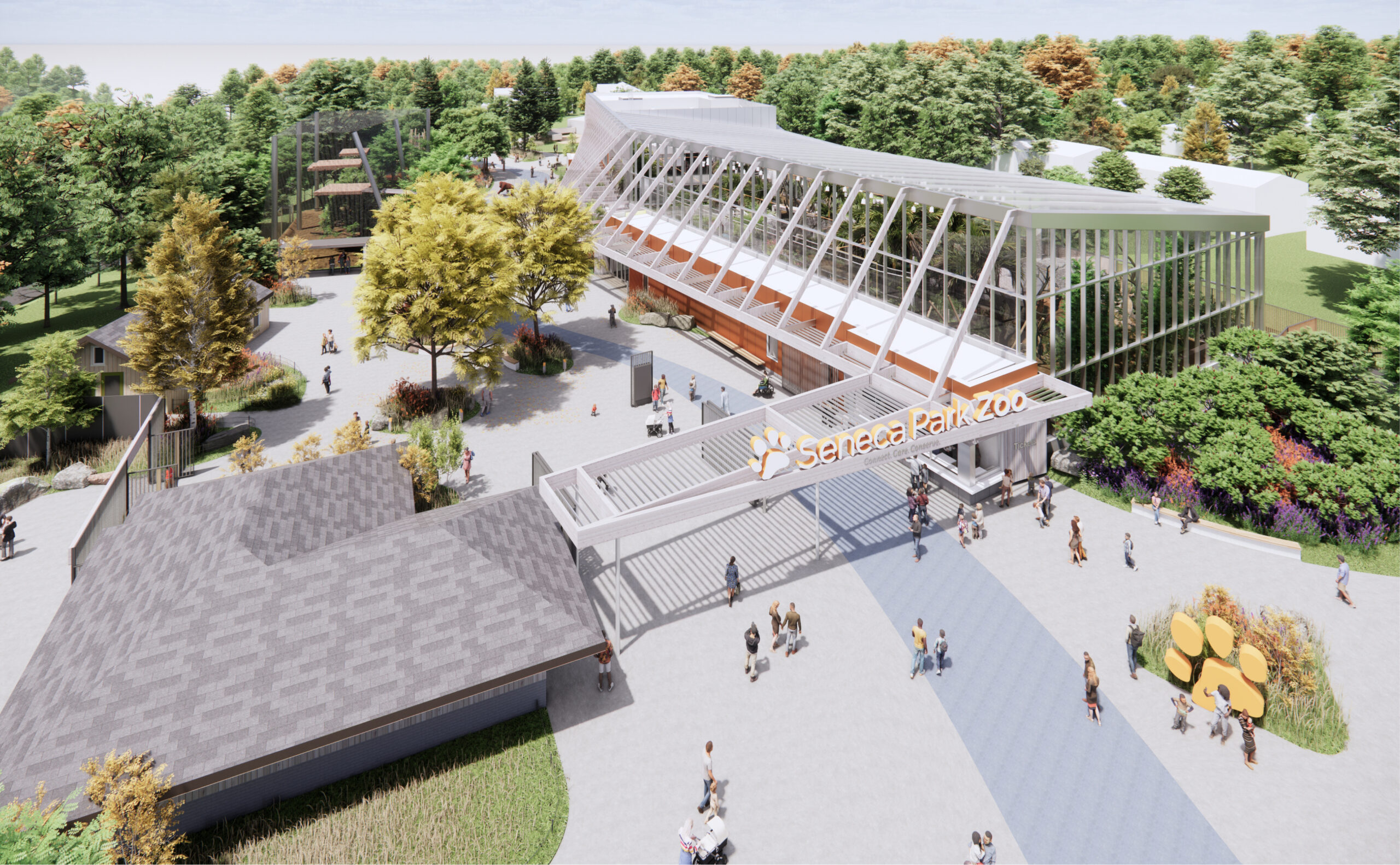
The design integrates sophisticated environmental controls, a high-performance building envelope, extensive energy modeling, electric heat pumps and chillers, and a geothermal system serving the administrative areas. Heat and humidity recovery, responsive ventilation, efficient lighting, and automated controls help reduce energy demand while maintaining the specialized conditions required by the animals and plants.
Water conservation, recycling within animal life-support systems, native landscaping, and integrated stormwater management further reinforce the project’s sustainability objectives. The project also served as a pilot for evaluating the International Green Construction Code, helping inform future sustainability standards for Monroe County.
Importantly, the project recognizes that sustainability cannot be separated from animal welfare. Daylight, temperature, humidity, ventilation, and habitat conditions must meet the needs of the animals while balancing energy use and building performance. This requires a rigorous, integrated approach to architecture and engineering in which the health of the building, its occupants, and its natural environment are considered together.
Perhaps the most significant transformation over these six decades has been the way we think about the relationship between animals and visitors. Early aquarium and zoo design often emphasized visibility, circulation, and the spectacle of observing wildlife. Today, we recognize that the most compelling visitor experiences often emerge from environments that align with animals’ natural behaviors.
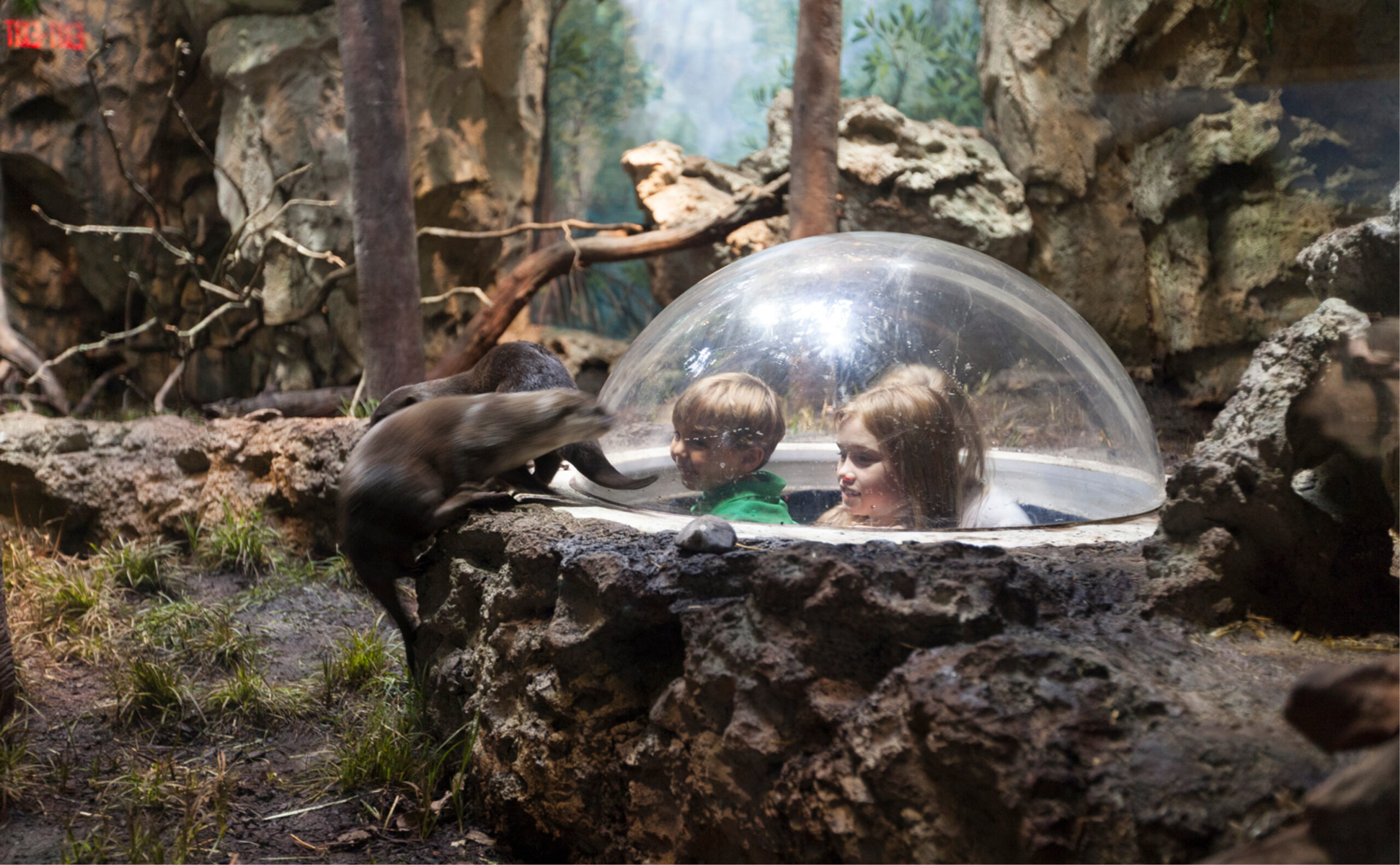
The challenge for designers is to bring these priorities together: creating habitats that support animal health, practical and efficient environments for keepers and staff, engaging experiences for visitors, and meaningful connections to larger conservation issues.
Zoos and aquariums are among the most important advocates for the preservation of wildlife and the ecosystems upon which it depends. Their ability to connect people emotionally with animals creates an opportunity to inspire conservation action. The architecture and exhibits we design can help make those connections tangible, transforming a visit into a deeper understanding of our shared responsibility for the natural world.
Looking back over 64 years, the projects have changed, the science has advanced, and society’s expectations have grown. From the revolutionary underwater experience of the New England Aquarium and the early experimentation of the Vertical Zoo to the freshwater ecosystems of the Tennessee Aquarium and the animal-centered, high-performance environments of Seneca Park Zoo, CambridgeSeven’s work has continually evolved alongside our understanding of the natural world.
Yet the fundamental idea that inspired our practice remains remarkably consistent: design has the power to connect people with nature and inspire them to protect it. As zoos and aquariums continue to redefine their roles as centers for animal welfare, conservation, and environmental advocacy, CambridgeSeven remains committed to creating places that advance these missions—places that are better for animals, more meaningful for visitors, and more responsible to the planet we share.
To celebrate Ocean Month, CambridgeSeven aquarium experts revisit the idea of Aquarium Trends, focusing on sustainability, resiliency and the incorporation of technology into aquarium exhibits.
View Post
How CambridgeSeven's work with zoos, aquariums, museums and research institutions strengthens their conservation education efforts.
View Post
The way that we build can have profound impact on our oceans and, in an era in which global warming is rapidly changing ecosystems, building responsibly is vital for our oceans.
View Post