Designing Low-Carbon-Footprint Exhibitions
Director of Sustainability Douglas Flandro analyzes how museum exhibitions can be designed to minimize waste and have a gentle impact on our planet.
Director of Sustainability Douglas Flandro analyzes how museum exhibitions can be designed to minimize waste and have a gentle impact on our planet.
Madeline Burns, AIA, LEED AP BD+C, CPHC highlights the importance of naturally biodiverse native landscapes in urban settings and what designers can do to create environments that are both sustainable and good design.
Timothy Mansfield, AIA, and Wonyeop Seok, AIA, discuss the new software and digital design tools used to create the breathtaking façade of the Roux Institute at Northeastern University in Portland, Maine.
The Kuwait Times profiles CambridgeSeven’s College of Life Sciences at Kuwait University as one of three buildings defining the country’s “architectural renaissance.”
CambridgeSeven is featured by WHOI in their most recent issue of Oceanus, with author David Levin sharing the teams’ collaboration on the design and creation of the Ocean Pavilion at COP28.
Pansy Schulman at Architectural Record” gives an inside look into the Museum of Modern Art’s newest exhibit.
Using bio-positive design to create opportunities that support flora and fauna at the ocean’s edge also create resilient and educational waterfront sites.
How aquariums are making their conservation and sustainability actions the theme of exhibits and vital components of their architecture.
While at the Design for Freedom Summit at Grace Farms, we learned five big steps architects can take to make better material choices.
Principal Justin Crane, FAIA, and Associate Douglas Flandro, LEED AP BD+C ID+C, CPHC, attended the annual Design for Freedom Summit at Grace Farms to learn more about using ethical supply chains in architecture and construction – an increasingly concerning topic as the industry learns more about where our materials are sourced. Justin recently posted an article about the importance of ethical construction supply chains and labor forces and we wanted to share some of the key takeaways raised by our colleagues at the conference to continue drawing attention to this critical issue.
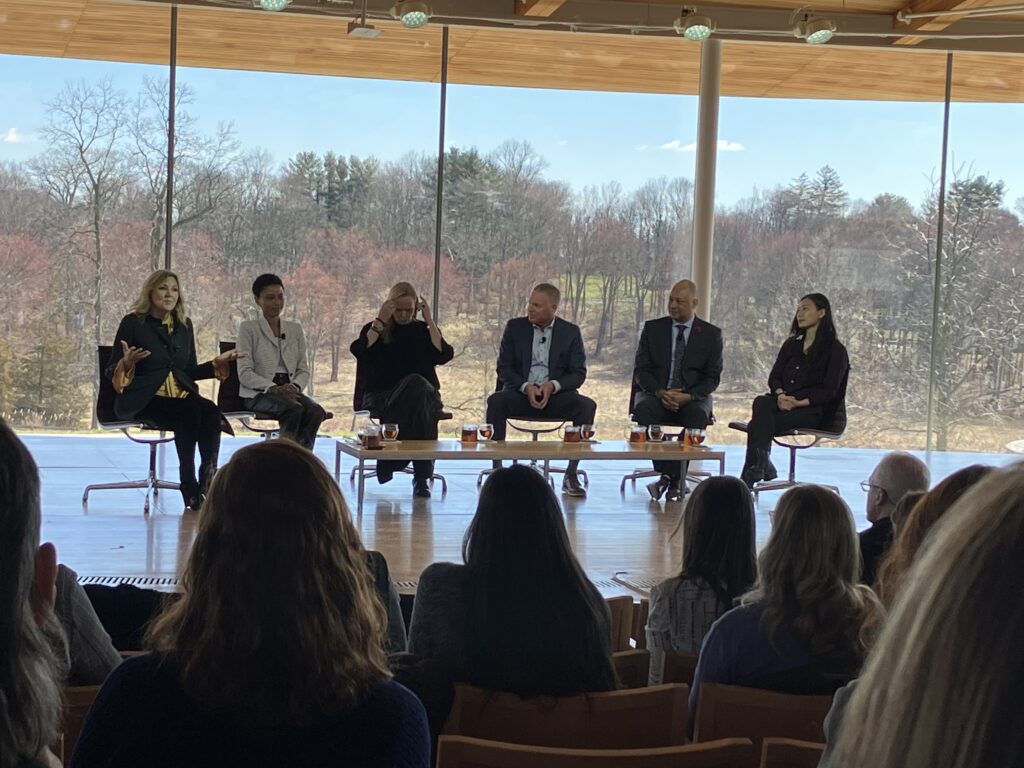
Architecture can be a driver for humanitarian outcomes. By ensuring that workers are paid fairly and that materials used in building construction are not derived from forced or from child labor, we can make a difference in the world. We should no longer be willing to take the “slavery” discount.
It is time for action now!
To learn more about the Summit and other ways that industry leaders are advancing this movement, read on!