Audubon Nature Institute Reimagines Audubon Aquarium and Insectarium
See a preview of the dramatic transformations CambridgeSeven is working on at the Audubon Aquarium of the Americas in New Orleans.
See a preview of the dramatic transformations CambridgeSeven is working on at the Audubon Aquarium of the Americas in New Orleans.
Historic International Trade Mart building’s renovation into the Four Seasons brings glamour back to city’s riverfront
A summary of CambridgeSeven projects in New Orleans and around Louisiana including hotels, museums, nature centers, and transit hubs.
Vue Orleans is the main attraction during a New Orleans food festival this month as a new dazzling showcase of NOLA culture.
Thanks to its luxurious hotel and spa experience, One Dalton is one of two hotels in Boston to receive this distinction.
Learn about some of the key steps our office takes to achieve LEED-certified architectural designs in academic settings and campuses.
Our in-house experts collaborated with a group of our talented consultants to summarize best practices for designing sustainable exhibits with wow-factor and longevity in mind.
Our in-house aquarium experts spent months collecting information about how aquariums can uphold their mission to conserve the natural environment through their own LSS and back-of-house systems.
The way that we build can have profound impact on our oceans and, in an era in which global warming is rapidly changing ecosystems, building responsibly is vital for our oceans.
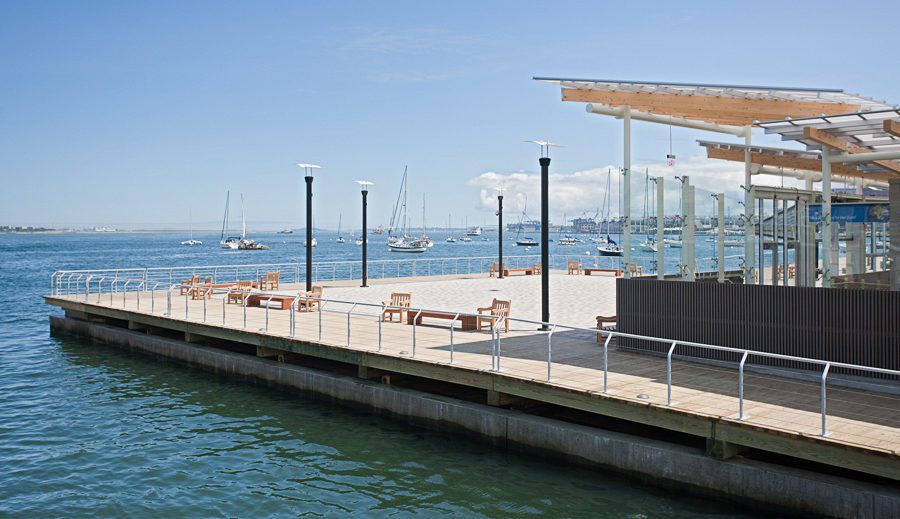
Traditionally, buildings and neighborhoods have been designed to separate and protect us from water, whether in the form of rain, streams, or oceans. Therefore, we imagine our architecture as self-contained systems with minimal relationship to our marine environments. However, the way that we build can have profound impact on our oceans and, in an era in which global warming is rapidly changing ecosystems, building responsibly is vital for our oceans.
This three-part series examines the fallacy that architecture and water are disconnected, will look at steps to correct the problem and, finally, reimagines architecture to save our oceans.
Nearly all our buildings affect the health of our oceans, no matter their location. Only 5% of North America’s land area is not part of a watershed that flows into an ocean. In other words, land use in 95% of our country affects our marine environment.
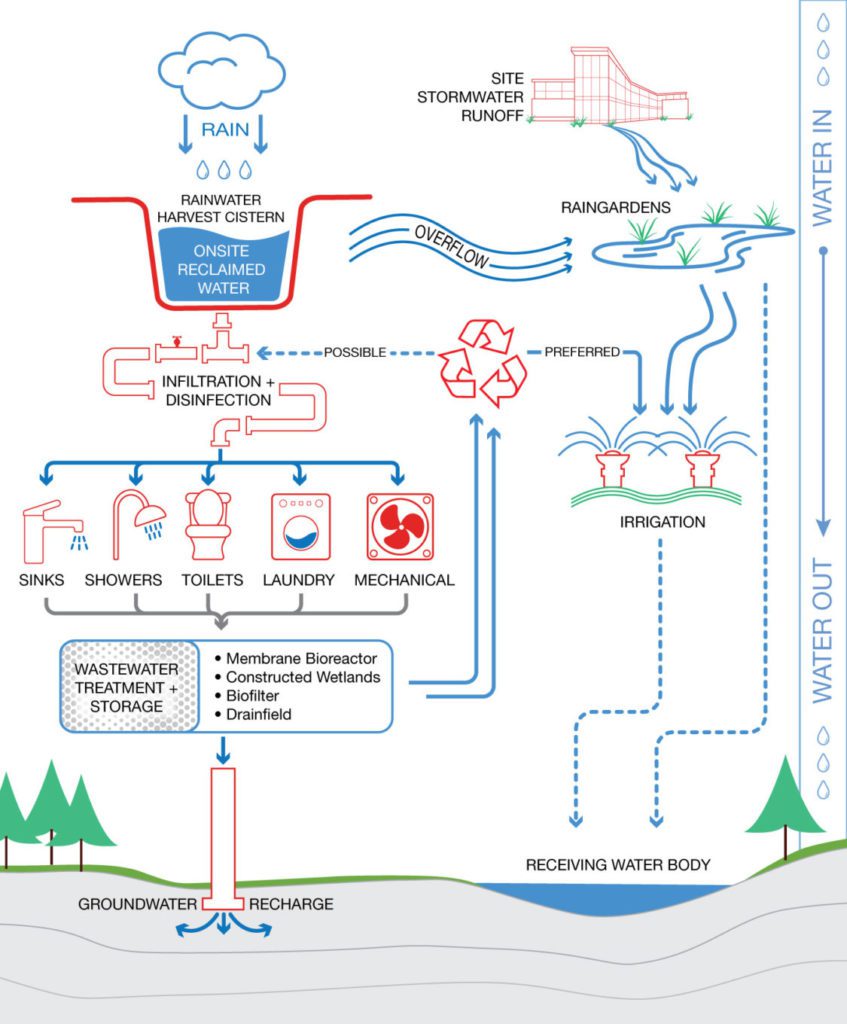
Poorly sited buildings and carelessly-designed landscapes affect all ecosystems downstream by sending pollutants into water bodies and creating “dead zones”—marine regions with low oxygen levels causing sea life to either die or flee. Although urban projects often feel especially remote from natural water bodies, site run-off can accumulate excessive debris, oil, chemicals, sediment, or other pollutants before entering storm drains and discharging into waterways. Therefore, design of water control systems—from gutters and downspouts to stormwater collection chambers and rain gardens—as well as the layout of landscape elements, must keep in mind the ultimate destination of the water that moves through a project site.
The rate at which we use water also has an effect on the distribution of water on the planet and the ecological balance of our oceans. Scientists estimate that oceans supply 90% of the evaporated water that goes into the water cycle, yet the connection to water sources is largely invisible in the buildings where we live and work due to “closed,” or piped water systems. And there is typically no relationship between the natural hydrological cycle of a site and the rate at which water can be obtained and discharged.
The connection between our oceans’ health and energy use in our architecture is better known. Buildings generate nearly 40% of annual global greenhouse gas emissions, and estimates indicate that humans will double the current building stock in the next 40 years.
The global warming resulting from fossil fuel use disturbs marine ecosystems in several ways:
Waterfront architecture offers our first hope for improving public understanding of the links between buildings, ocean, and climate change, with buildings accommodating marine activities such as boating, commercial fishing, lobstering or shipping.
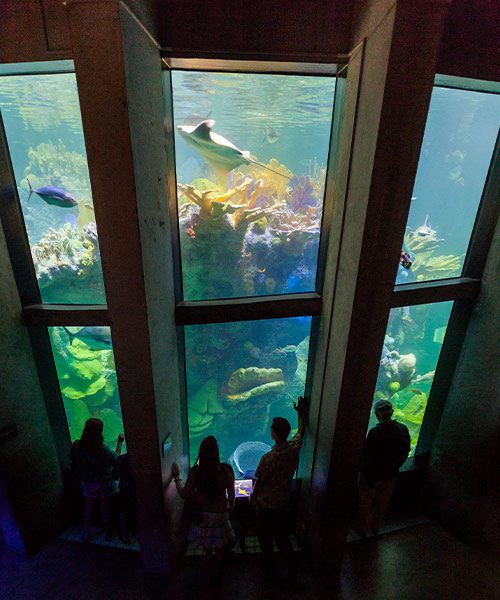
Architecture that supports public education, however, may have the most far-reaching effect. The New England Aquarium was a precedent-setting building that organized its circulation around the 22-foot-tall “Giant Ocean Tank,” helping the public understand the richness and literal depth of life in the ocean, complemented by its robust research into oceans worldwide.
All architecture, whether on the shore or inland, can be “blue” architecture that contributes to the health and awareness of our marine environments. Water that flows over, under, and through our buildings and sites influences the oceans, no matter how distant. Further, the ways we use our buildings have a major impact on climate change and the health of the oceans. How architecture can create a paradigm shift in the way we treat our marine environments, and how a truly “blue” architecture will perform, are critical questions to the way we design, build and live today.
This article was originally published May 5, 2020