Evolution of Aquarium Design
To celebrate Ocean Month, CambridgeSeven aquarium experts revisit the idea of Aquarium Trends, focusing on sustainability, resiliency and the incorporation of technology into aquarium exhibits.
The planning board of Portland, Maine has approved the construction of Northeastern’s Roux Institute campus at the site of the former B&M Baked Beans factory in East Deering.
American Press takes a look at the progress of the Port Wonder Children’s Museum and Nature Center.
Architecture Firm CambridgeSeven Awards 7th Annual STEAM Scholarship to Cambridge Rindge and Latin Graduate Kidus Kebede.
Principal Chris Muskopf, AIA shares how enhanced methods of graphic signage, known as Interpretative Wayfinding, transforms navigation into true engagement within museums, institutions and landscaped environments.
Our exemplary work on the Foundry 101 has been highlighted in the AIA’s newest resource, which helps architects renovating and adapting existing buildings. Its primary goal is to equip architects with the necessary knowledge to make informed decisions that promote sustainability and resilience while minimizing costs.
Madeline Burns, AIA, LEED AP BD+C, CPHC highlights the importance of naturally biodiverse native landscapes in urban settings and what designers can do to create environments that are both sustainable and good design.
Everyone talks about office-to-residential conversions as downtown Boston’s savior. But CambridgeSeven and others believe office-to-hotel projects could be just as important, if not more so.
The New York Times shares the top 6 hotel pools in the U.S. featuring the outdoor pool at CambridgeSeven’s Four Seasons New Orleans Hotel and Private Residences.
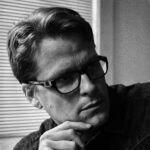 “The moment just before recognition holds a lot of energy and potential. My work often blurs the boundaries between disciplines and genres, and in some way my work might raise some questions. With a lot of art—cinema and music included—it’s not necessarily about gaining some special knowledge; rather, it’s more about sustaining a sense of wonderment.” – Alexander Coster Scott
I was born 1965 in Washington, DC, and have lived in Massachusetts since 1980. In my teens, I decided to become an artist and began selling directly to old New York families and eventually through James Andrew, an interior designer who worked for Albert Hadley. After well-received shows of my painted work at the Institute of Contemporary Art in 1999 and a one-man show in Sweden soon after, I transitioned more exclusively to large-scale photography. My work over the last 24 years has seen quite a few patrons – notably Tyler Brûlé, who promoted my work in his publications. HP Hood/Catamount Management Corporation is also a standout. My recent photographs also fill Four Seasons One Dalton, a CambridgeSeven partnership project. The works were commissioned through art advisor Kate Chertavian with the support of Richard Friedman (Carpenter & Co.) and the late Henry Cobb.
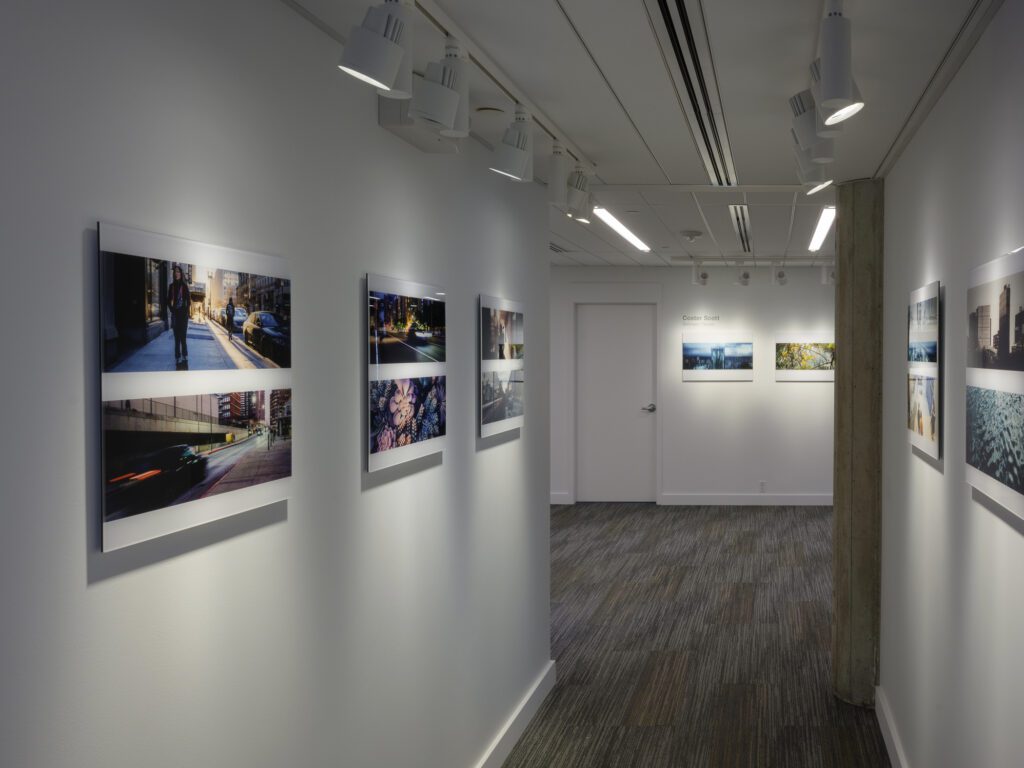
I don’t identify with any particular type of artist. My work often blurs the boundaries between disciplines and genres, making it hard to categorize.
I have a BA in art history from Boston University, where I studied under the brilliant Hellmut Wohl. This provided a crucial launching point for making art. I took art courses in Florence and Rome in the early 80s, as well as courses in oil painting through the Cleveland Institute of Art in the South of France, and at the School of the Museum of Fine Arts, Boston. As a teen, I had darkroom classes in photography and grew up surrounded by art and artists. My most useful “applied” education came more informally from exchanges with master artists like William Eggleston, the late William Christenberry, and the late Swiss artist Claude Saucy (who studied under Max Bill). I have a degree in Buddhist studies from the Sakya Institute, a school headed by the Tibetan Buddhist chaplain at Harvard; I include this because it deals with perception at a very fundamental level.
Growing up in DC in the 60s and 70s, I was exposed to so much stimulating art. Galleries like IM Pei’s East Building, the Hirshhorn, and the Corcoran, were weekly destinations. I’ve been told that I loved Calder and Rothko even before I could speak. In the late 80s, the great photographer William Eggleston and his eldest son visited my family in DC and they gifted us Eggleston’s book, The Democratic Forest. I treasure that book, now well worn. It was my first realization of photography as a means of deep exploration and a way of life.
Aside from the potential dangers of creating paradoxes and temporal complications, I doubt that my younger self would listen to any advice from my future self. One has to find one’s way in the now, however perfectly imperfect.
For many creative people, there isn’t a distinction between life and process. That holds for me as well. That being said, I’m best when I’m semi-free from the ordinary anxieties of living – even if those same anxieties become my muses! The main thing is knowing what turns me on and allowing that to manifest in my art. In commissioned situations, I always do parallel bodies of work: something for myself and something for the client. This helps me cope with the pressures of meeting specific expectations. Clients often end up resonating with the work I created for myself!
My style is constantly in flux. The temptation is to make something that is recognizably one’s work from across the room, and I see that many artists become siloed in a singular style. For me, style comes as an expression of content, and as such, it changes from moment to moment.
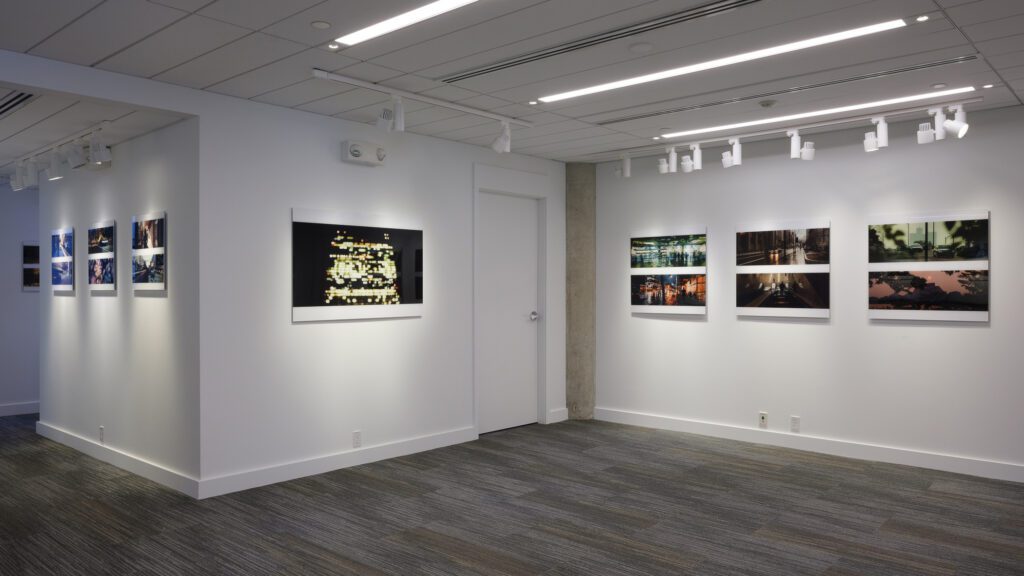
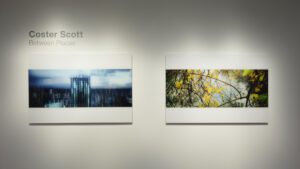
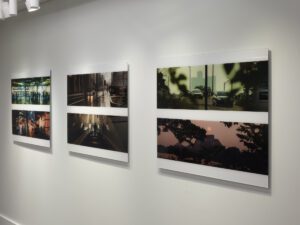
“Between Places” by Coster Scott is now on display at the Paul Dietrich Gallery through May 03, 2024.