Smart Design in Lean Times: Keeping Museums on Track
With cultural institutions being asked to do more with less, thoughtful design can make a remarkable difference. Even with tight budgets and rising costs, there are smart ways to create engaging visitor experiences that are flexible, cost-effective, and built for joy.
Small Interventions Yield Big Smiles
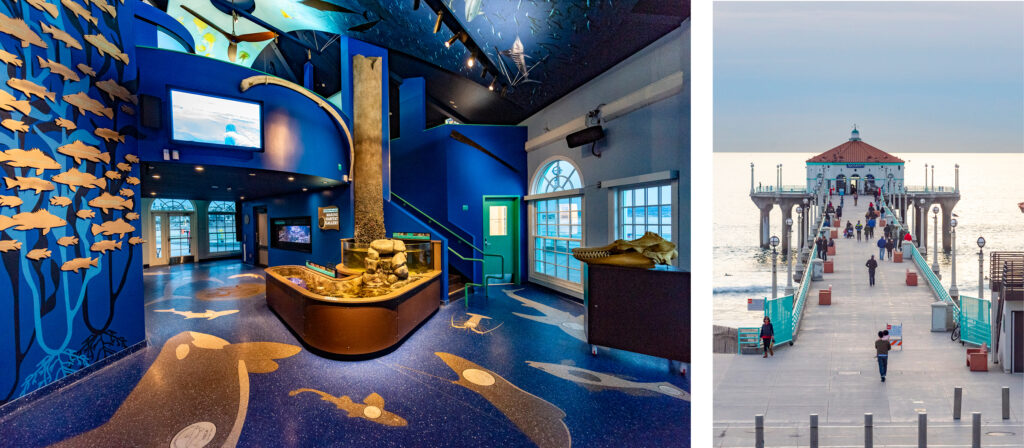
Modest budgets can equal spectacular results. Not every museum needs to have the latest tech to grab guests’ attention and increase attendance. Our job is to design flexible and engaging exhibits that capture imagination using our imagination, and budget realities often generate the most creative solutions. Roundhouse Aquarium is a beloved jewel on Manhattan Beach’s pier but at just 2000sf, its tiny footprint needed maximum impact. Always iconic from the outside, its outdated exhibits needed to match. Using clever planning (and a little bit of paint!) we restored the existing tanks, rearranged the layout to utilize as much of the compact space as possible and designed exhibits that can be easily updated and maintained, all staying true to the building’s original charm and heartfelt mission.
Reuse Saves the Planet and Your Budget
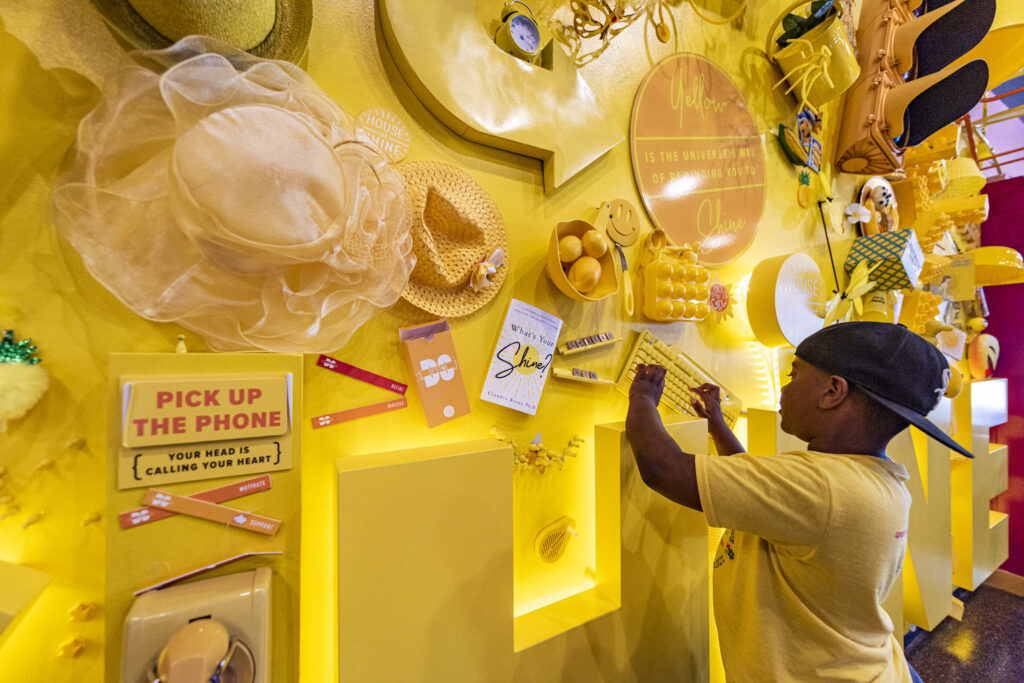
Responsible and sustainable design enables us to accomplish multiple objectives while conserving resources and controlling costs. For example, at the OH WOW! Children’s Center for Science & Technology, a renovation constrained by a limited budget, our team prioritized reuse by salvaging numerous existing cabinets and exhibit furnishings for integration into the newly configured galleries. For example, the original illuminated exterior “OH WOW!” sign was relocated indoors to the souvenir shop as part of the redesigned entry, preventing it from ending up in a landfill. And instead of sourcing new material, the center collaborated with the community to collect meaningful personal objects, which formed the interactive “SHINE” wall, a dynamic collage that educates children on mental health awareness.
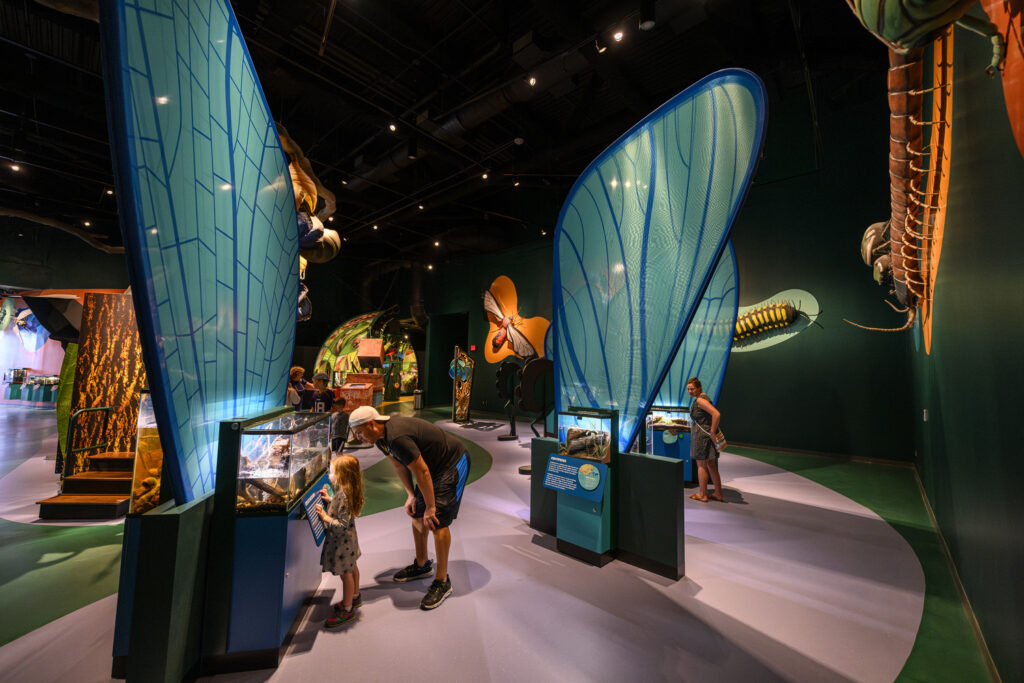
At Audubon Nature Institute’s Insectarium, we came up with a similar solution – some of the existing exhibits were reused and refreshed with enhanced graphics and updated storylines, shaving costs that could be allocated elsewhere. It’s a strategy we implement regularly and one we recommend first: see what’s re-useable! Because sustainable practices can simultaneously reduce expenses and minimize environmental impact, often while supporting the institution’s guiding principles.
Lights Out – Intentionally!
Fluctuating energy costs don’t have to be a major worry when smart solutions have been put in place. To mitigate and control energy use, CambridgeSeven has developed a custom digital tool to bring greater precision and accountability to how energy use is measured in museum exhibits. Traditionally, electrical engineers and lighting designers rely on Lighting Power Density (LPD) to evaluate a new exhibit space. LPD calculates the maximum potential power draw if all lighting fixtures are operating continuously: an important metric for determining peak electrical load, but one that doesn’t reflect how exhibits actually function day to day.
Our new tool shifts the focus from theoretical maximums to real-world performance. It tracks the actual energy consumption of each fixture over time, allowing us to calculate Energy Use Intensity (EUI or the annual energy use per square foot. EUI is a widely recognized benchmark used in LEED and other high-performance building standards, making it a meaningful way to evaluate exhibit sustainability within a broader architectural context.
By setting EUI targets for exhibit lighting and media systems, we’re able to implement more efficient design strategies, such as integrating motion sensors and daylight-responsive controls to reduce unnecessary energy use. It also provides valuable insight into how exhibit-specific energy demands contribute to the building’s overall EUI, helping teams make more informed decisions at both the exhibit and building scale.
Flexible Programming + Clever Arrangements = Repeat Visitors
CambridgeSeven worked with the Rancho Cucamonga Public Library to reimagine the library’s second floor as the Randall Lewis Second Story and Beyond, a ticketed children’s museum, while preserving full library services on the first floor. The project repositions the library as both a civic anchor and an immersive destination, expanding its role in early childhood learning through play, exploration, and narrative-driven environments.
Converting the underutilized library space into a flexible, theme-based children’s museum illustrates a cost-efficient model for long-term exhibit planning. Instead of rebuilding environments for each new concept, the approach relies on a permanent exhibit infrastructure – climber, lighting, and building system -paired with modular environmental graphics and interactive media that can be easily refreshed. This “stage-set” strategy reduces capital costs by avoiding repeated large-scale fabrication while also simplifying maintenance.
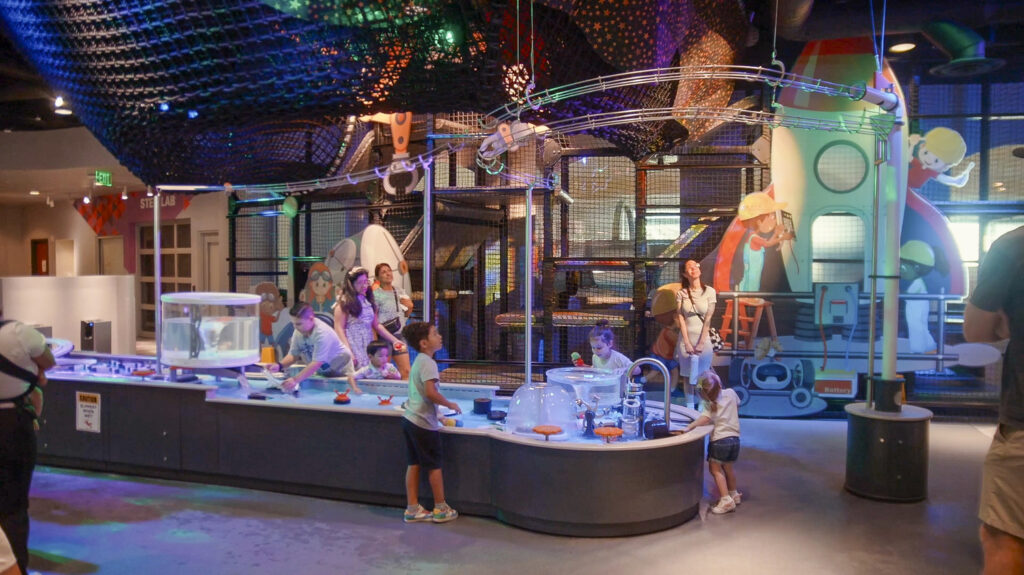
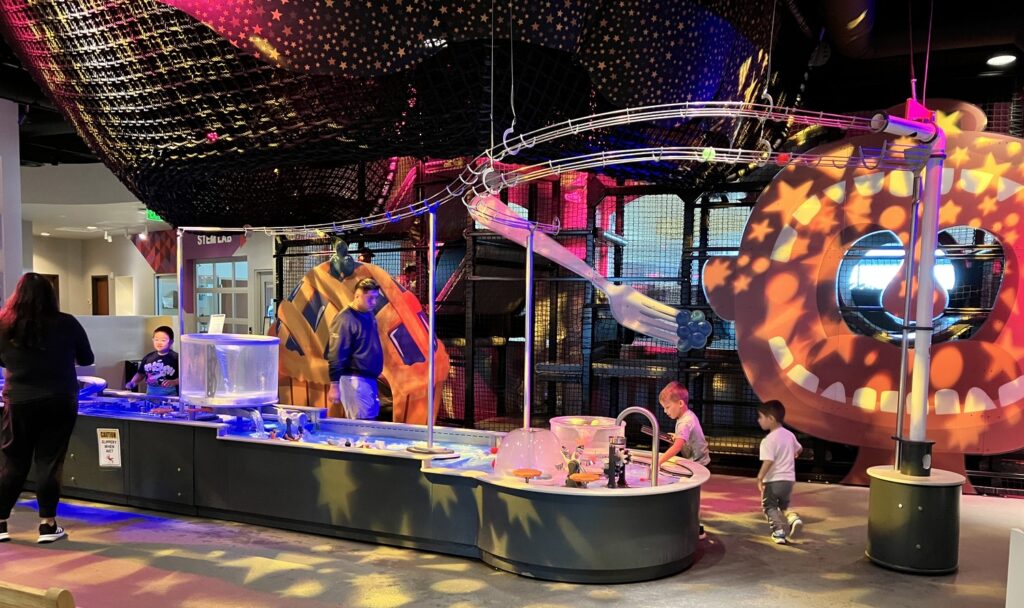
Because the rotating thematic elements are lightweight and interchangeable, updates can be completed quickly and at a fraction of the cost of full exhibit builds. As a result, transformations are both efficient and regular. A central climbing structure can shift from a rocket ship to a mountain summit to a playful journey through a child’s gullet, simply through the recalibration of surface, story, and graphic overlay. These rapid refresh cycles minimize downtime while encouraging repeat visitation, ensuring the museum remains dynamic for returning families.
By aligning operational flexibility with reduced lifecycle costs, Second Story and Beyond offers a replicable model for cultural institutions seeking to balance financial sustainability with continual reinvention, an approach where good design provides the framework.
Doing more with less is not just a budget strategy, it is a design mindset that can help museums stay vibrant and resilient. With the right design approach, limited resources do not have to mean limited impact; they can be the catalyst for smarter, more sustainable, and more imaginative design.
Related Stories
Climate Hope: Bootstraps Edition
Grassroots initiatives and innovation that inspire hope and action for our climate.
View Post
Design for Playful Learning
In this article, we explore the multitude of ways we can successfully create playful learning spaces that enrich children of all ages.
View Post