The Green Firehouse Is No Longer a Paradox
Architect Magazine - January 29, 2026
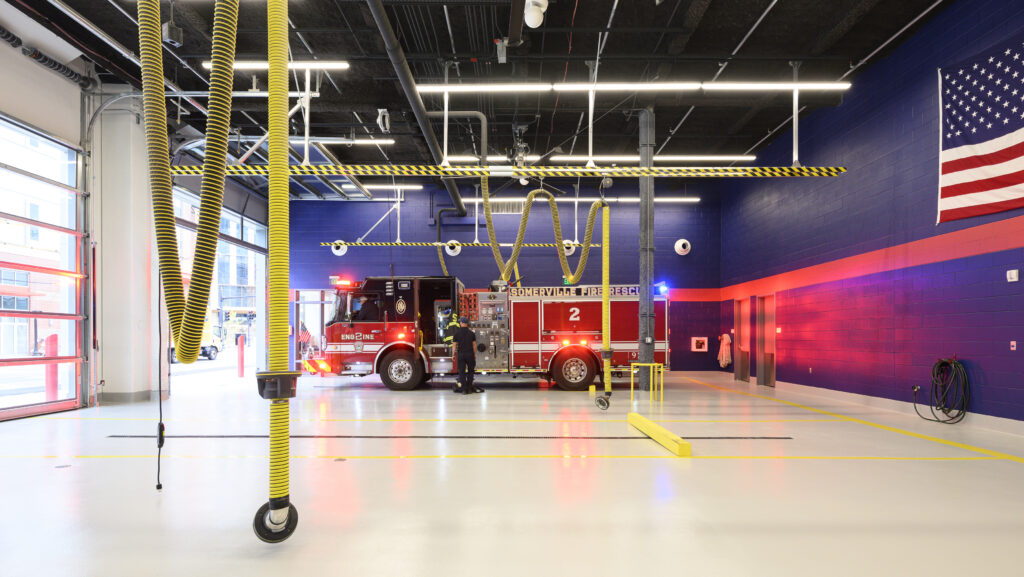
Why cities are quietly turning emergency infrastructure into the front line of climate action.
For most of the 20th century, fire stations were designed around a single mandate: speed. Buildings were optimized for turnout times, apparatus access, and operational durability, often at the expense of occupant health, urban presence, or environmental performance. Diesel engines idled inside concrete boxes. Sleeping quarters sat steps away from exhaust-filled bays. Energy use was high, air quality was compromised, and sustainability—if considered at all—was treated as incompatible with emergency readiness.
That logic is beginning to fracture.
Across North America and Europe, municipalities are quietly rethinking emergency infrastructure as a critical lever for climate action, workforce health, and civic identity. In San Diego, The Miller Hull Partnership’s recently completed Fire Station 52 similarly sets a precedent for sustainable emergency infrastructure, housing the region’s first all-electric fire apparatus and integrating contamination control with climate-aligned design while responding to steep site conditions and community context.. And now, Somerville, Massachusetts’ new Assembly Row Fire Station—designed by CambridgeSeven and completed in early 2026—offers a clear snapshot of where this shift is headed.
The 10,000-square-foot, all-electric facility is the city’s first fossil-fuel-free fire station and its first newly built firehouse in nearly 50 years. But its significance extends well beyond its footprint. The project reframes the fire station not as a hardened industrial outpost, but as a high-performance workplace, a public-facing civic building, and a prototype for climate-aligned municipal infrastructure.
From Carbon-Intensive to Carbon-Conscious
Emergency facilities are among the most energy-intensive building types in the public sector. They operate 24/7, require high air-change rates, and must remain functional during extreme weather and power disruptions—conditions that have historically justified heavy mechanical systems and fossil-fuel dependence.
Somerville’s response was not to scale back ambition, but to rethink systems entirely. The Assembly Row station is fully electric, relying on air-source heat pumps and an energy recovery unit to provide heating, cooling, and ventilation. Red-list-free materials were specified throughout, improving indoor air quality while reducing environmental and human health risks.
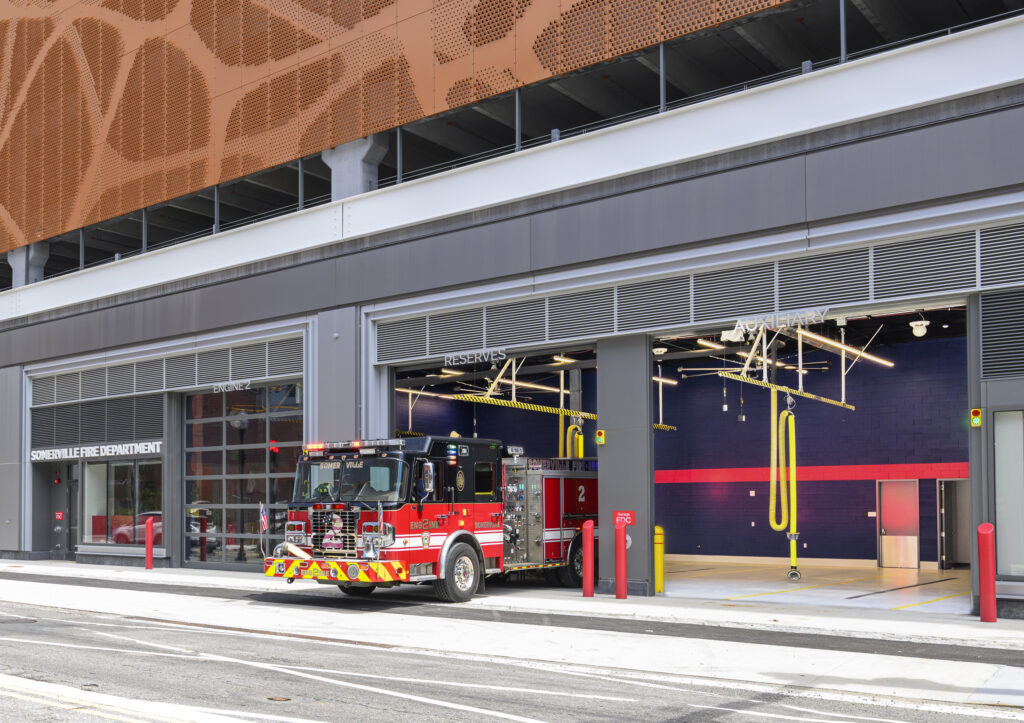
As cities pursue aggressive decarbonization targets, fire stations and police facilities—once seen as exemptions—are increasingly becoming test cases. If essential services can operate without fossil fuels, the argument goes, few building types can claim immunity.
“This is an environmentally sustainable building that sets the tone for the City’s Community Climate Action Plan,” said Justin Crane, FAIA, Principal at CambridgeSeven. “For CambridgeSeven, seeing this new station come to life as a home for Somerville’s firefighters and as a symbol of the city’s ongoing commitment to public safety is deeply meaningful.”
Designing for Firefighter Health—Not Just Response Time
Equally transformative is the building’s interior logic. In recent years, the fire service has confronted a growing body of research linking station design to elevated cancer rates and long-term health risks. Exposure to diesel exhaust, contaminated gear, and poor indoor air quality has shifted design priorities from mere durability to occupational wellness.
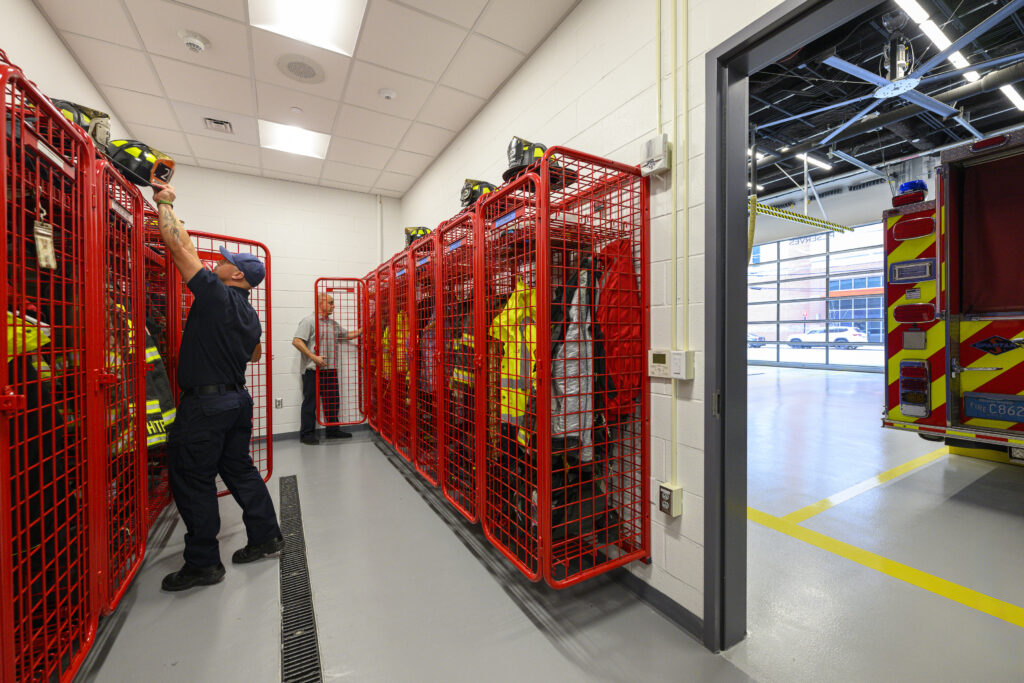
At Assembly Row, the station is organized around distinct hot, warm, and cold zones that separate contaminated areas from living and sleeping spaces. Apparatus bays and gear storage are physically and mechanically isolated from bunk rooms, kitchens, and common areas—an approach increasingly advocated by firefighter health organizations but still unevenly adopted nationwide.

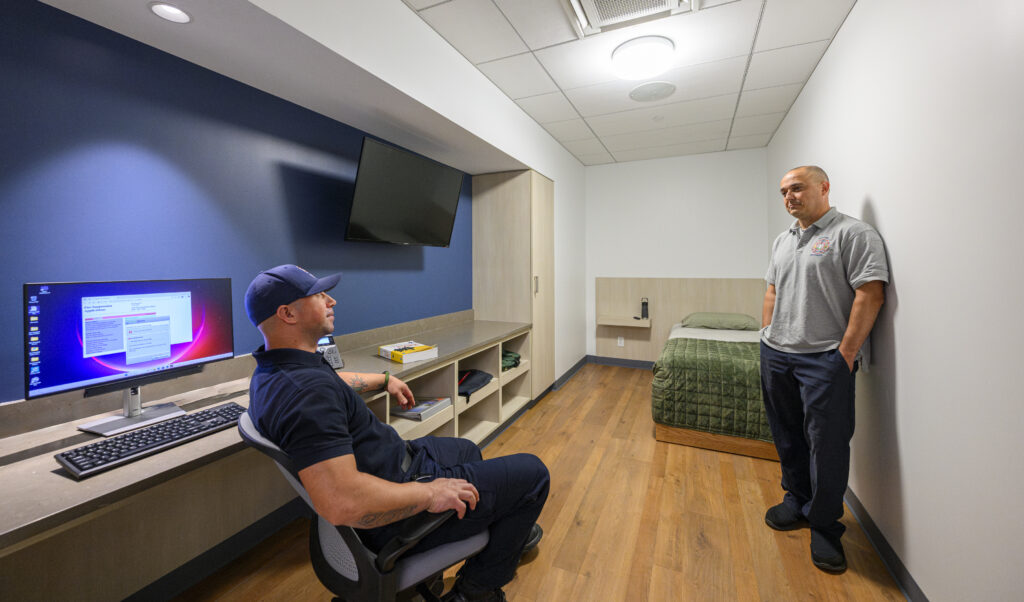
Sleeping quarters further reflect a shift in thinking. Rather than communal bunk rooms, individual sleeping spaces were designed with a hospitality-centric approach, acknowledging the need for privacy and restorative rest amid unpredictable schedules. Fitness rooms, dedicated locker areas, and flexible meeting spaces reinforce the idea of the station as a workplace designed for longevity, not attrition.
“It has been nearly 50 years since Somerville built a new fire station—and our firefighters’ needs have changed dramatically in that time,” said Somerville Mayor Jake Wilson. “With the opening of the Assembly Fire Station, we delivered a station built for the job they do today: safer working conditions, healthier spaces, and a modern layout that supports fast, reliable response.”
Emergency Architecture as Urban Architecture
Perhaps the most visible departure from tradition is the station’s relationship to the city. Rather than being tucked behind service roads or buffered by parking lots, the building occupies a prominent position at a major entry point to Assembly Row—one of the region’s most intensively developed mixed-use districts.
This siting reflects a broader rethinking of civic infrastructure as part of the public realm. As cities densify and land values rise, emergency facilities are increasingly embedded within mixed-use neighborhoods rather than isolated on municipal parcels. The challenge is not only operational efficiency, but civic presence.
At Assembly Row, the fire station functions as both infrastructure and identity marker—a visible symbol of public service that reinforces neighborhood character rather than disrupting it. The project demonstrates how critical facilities can coexist with retail, housing, and public space without sacrificing readiness.
“We’re proud to bring this essential service to Assembly Row in a way that not only supports our first responders but also strengthens the vitality and identity of the neighborhood,” Crane said. “It stands as a welcoming, celebratory space that serves its firefighters while embracing its neighbors.”
A Model Cities Are Watching Closely
Somerville’s project arrives amid growing pressure on municipalities to modernize aging public building stock while meeting climate mandates and workforce expectations. Across the U.S., many fire stations date from the mid-20th century, built long before concerns about carbon emissions, indoor air quality, or long-term firefighter health entered mainstream discourse.
What distinguishes the Assembly Row station is not a single technical innovation, but the convergence of multiple priorities: decarbonization, occupational health, urban integration, and civic symbolism. It suggests that emergency infrastructure—often treated as a necessary but invisible expense—can instead become a platform for public leadership.
More than just a building for emergency response, the station offers a roadmap for how cities might approach the next generation of essential facilities: libraries that double as resilience hubs, schools that serve as climate shelters, and fire stations that quietly demonstrate what fossil-fuel-free public safety looks like in practice.
As climate change intensifies and urban systems face mounting strain, the question is no longer whether emergency infrastructure must evolve—but whether cities can afford not to let it lead.