Could another city’s former jail-turned-hotel be a blueprint for old Detroit police headquarters?
Crain's Detroit Business - June 16, 2026
By Kirk Pinho
One of downtown Detroit’s remaining vacant buildings has long been discussed for potential conversion to a hotel. One small quirk: It has 105 jail/holding cells across the eighth and ninth floors.
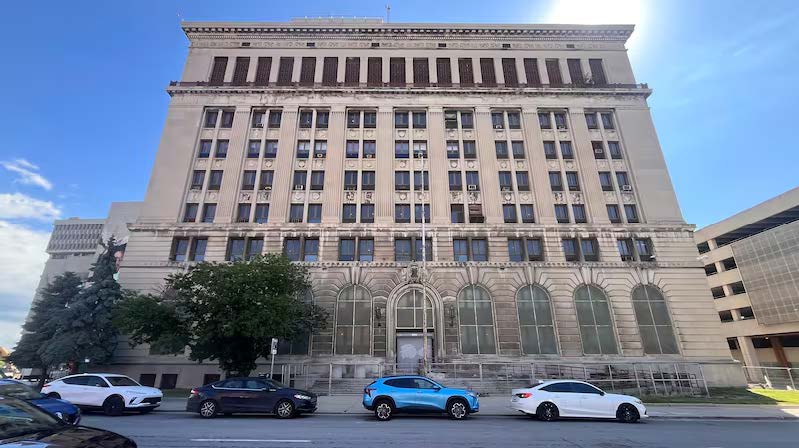
To be perfectly clear, Dan Gilbert’s Bedrock LLC real estate company that owns the former Detroit Police Department headquarters at 1300 Beaubien St. in Greektown isn’t saying anything publicly about its intentions, although hotel use has long been a concept kicked around.
Bedrock acquired the Albert Kahn-designed building, which housed the police department for some 90 years until 2013, from a Detroit bankruptcy-era creditor in 2018.
The company declined a request for an interview on plans for the building and noted that no plans have been confirmed.
But a jail-to-hotel conversion might be less far-fetched than it would seem. It’s been done before.
If you look about 700 miles to the east in Boston, you can find one example of how you can get people to fork over money to stay in a place that, in a previous life, many people had to fork over money to get out of — if they were ever freed.
The Liberty Hotel in Boston’s Beacon Hill neighborhood is an adaptive reuse of the former Charles Street Jail, which was built in 1851 and ultimately shuttered in the 1970s. Massachusetts General Hospital later bought the property and eventually contracted to preserve and redevelop it, reopening in September 2007 with 298 rooms following a $110 million project.
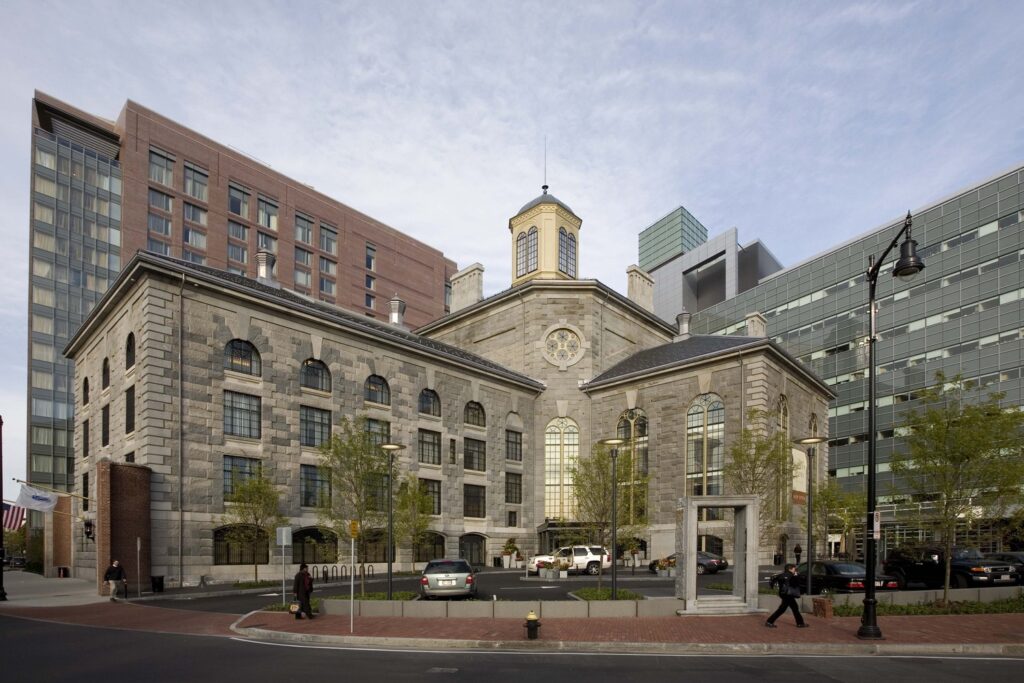
It was no small feat, said Timothy Mansfield, president and CEO of CambridgeSeven architecture firm that designed it. (Mansfield has his own connection to Detroit, as his company did work on Little Caesars Arena about a decade ago.)
To accommodate all of the 200-300 rooms the hospital wanted, a connected 16-story tower was built on the lot. It’s there where the majority of the rooms are, although some guest rooms are in the original jail, designed in what’s known as a cruciform panopticon, Mansfield said.
The Boston jail’s original 90-foot rotunda was restored, as was the balustrade and walkways around the rotunda where access to the jail cells was.
A dropped ceiling that was installed during the 1970s to save money during the energy crisis was removed, opening up the view of the cupola — re-created after it was removed in the late 1940s — from the rotunda, Mansfield said.
Importantly, the team decided to “lean into” the property’s history, Mansfield said.
The hotel’s restaurant? It’s called Clink. The bar? Alibi.
“We didn’t want to lose the idea that it was a jail,” Mansfield said, noting that things like conference and meeting rooms and offices occupy the top floors of the Gridley James Fox Bryant-designed building. “We actually wanted to turn it around and have some fun with it because it has this rich history, and the story that we told resonated with guests.
“What we did was we made (the cells) more of like a novelty within the restaurant,” Mansfield said. “Some of them have a four-top table, so you can have a meal in the cell, for example. It’s changed a bit over time, but what I think is important is that what we did was tell the story through sort of this whimsy and fun, but it is authentic. I mean, this was these were real jail bars. These were the doors and we restored them. The brick is the brick. A lot of it was the authentic story, and I think people really enjoy the authenticity in the work.”
So if you’re looking to stay in the same place that once housed Albert DeSalvo, better known as the Boston Strangler; James “Whitey” Bulger; or Nicola Sacco and Bartolomeo Vanzetti, look no farther than 215 Charles St.
Perhaps someday we’ll say something similar about the Detroit Police Department’s former digs.