The Always-On Stadium
Designing Sports Venues as 365-Day Cultural Destinations
By Timothy Mansfield
From Game Day to Every Day
For most of their history, sports venues came alive only a handful of days a year and then sat relatively dormant during the off season. That model is rapidly disappearing as owners, leagues and municipalities are now investing in their stadiums and arenas to create 365-day destinations, adding attractions, concerts, retail, hotels, and restaurants to generate revenue, community engagement and brand equity long after the final whistle. CambridgeSeven has spent decades at the intersection of architecture and exhibit design, and for just as long we have helped sports organizations answer a deceptively hard question: what does a venue do on the 344 days it isn’t hosting a game?
Sports Heritage as Infrastructure, Not Afterthought
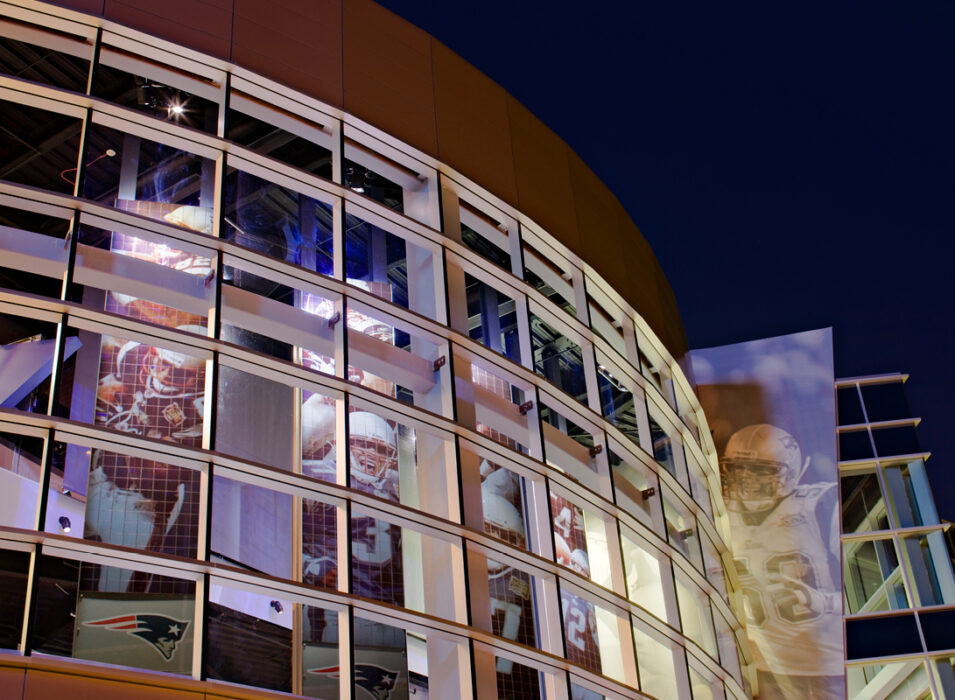
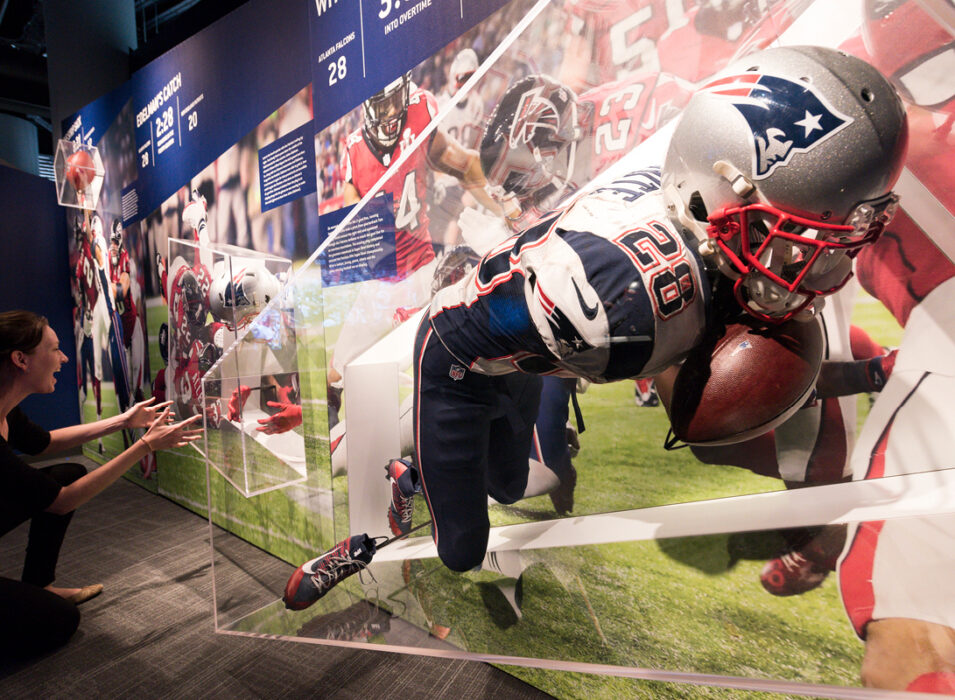
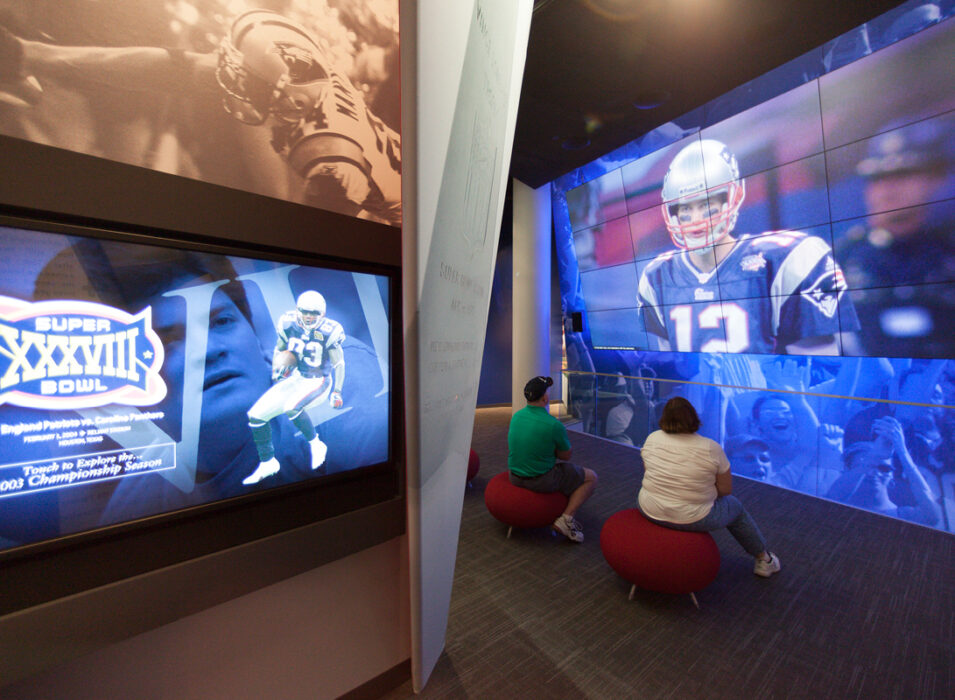
Our answer has emphatically been to cultivate a diversity of fan experiences, including sports heritage and team storytelling, directly into the infrastructure of the stadium or arena. CambridgeSeven was fortunate to be at the advent of this movement collaborating with The Kraft Group in the creation of Patriot Place, a 1.3-million-square-foot, open-air shopping, dining, and entertainment center built directly around Gillette Stadium in 2007. It functions successfully as a bustling year-round lifestyle hub for sports fans, shoppers, and residents alike. As part of the development, CambridgeSeven designed the New England Patriots Hall of Fame and Team Store, one of the vanguards of the NFL’s venture into sports museums and team stores, that continues to serve as an integral year-round program for fan engagement. In addition, we designed the destination restaurant CBS Scene Restaurant – part sports bar and part cultural museum celebrating the rich history of CBS Network’s legacy in news, sports and entertainment. These venues were designed at the outset as part of an integrated vision that has created a dynamic year-round destination and has increased revenue streams not only for the ownership group but also for the town of Foxboro, MA.
Integrating the Experience
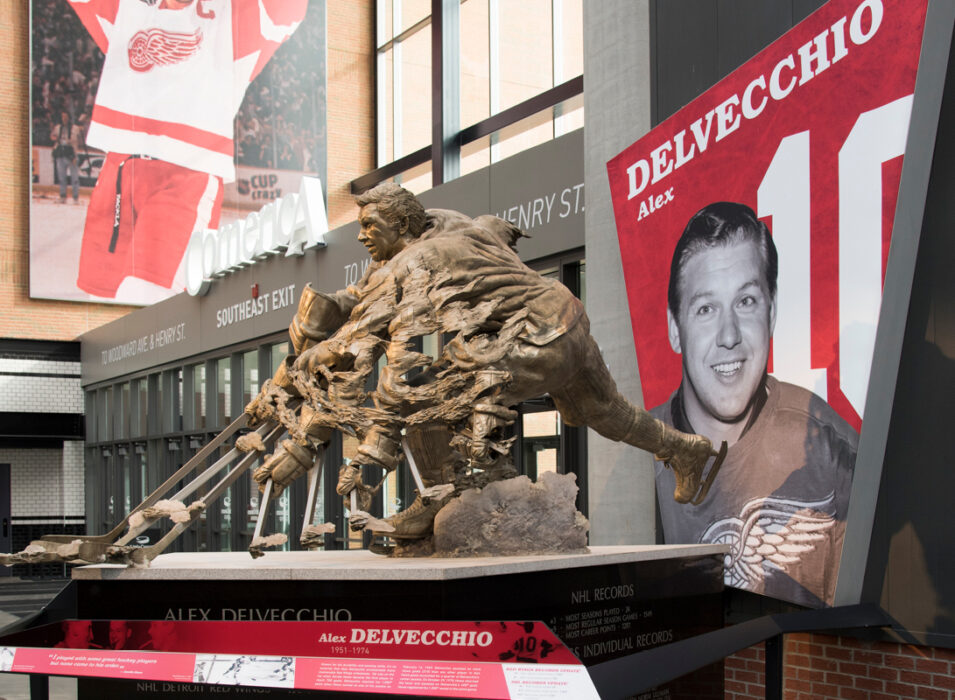
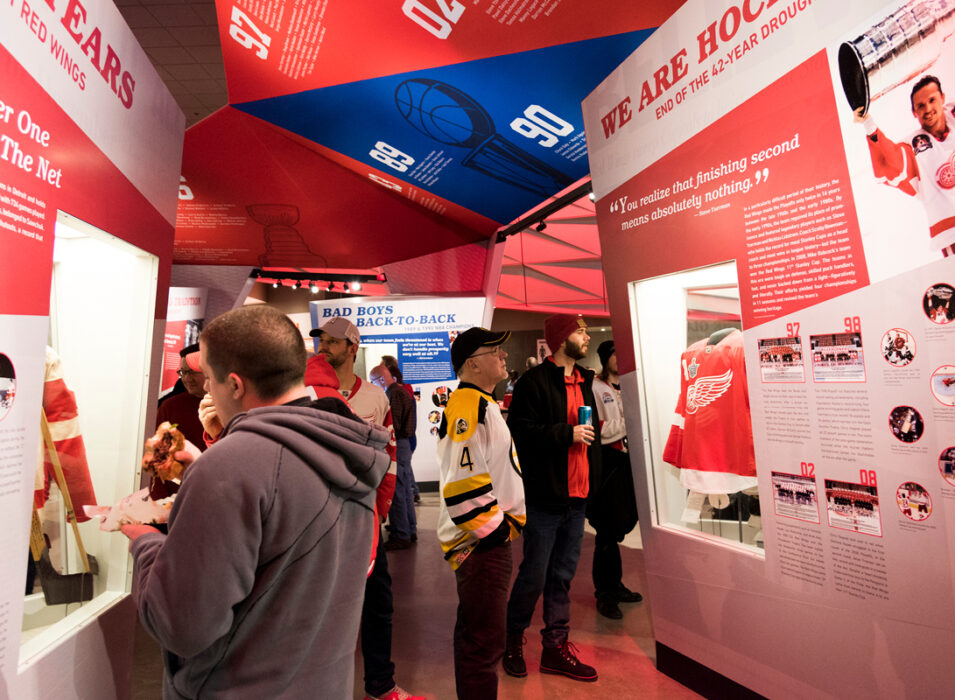
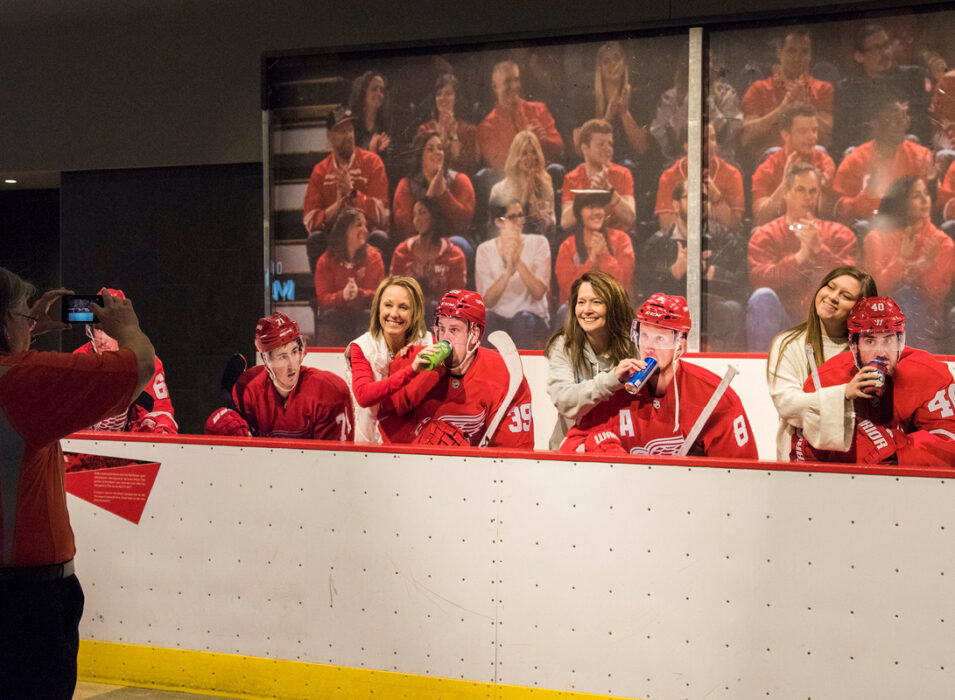
At Little Caesars Arena in Detroit, home to the Red Wings and Pistons, CambridgeSeven expanded on our approach: rather than isolating team history in a dedicated gallery, we wove heritage exhibits and stories throughout the main concourse itself. Exhibits at the arena’s three primary entrances greet every visitor, whether they’re there for a hockey game, a basketball game or a concert, with augmented-reality selfie moments, artifacts from Detroit’s storied past, and icons drawn from the Red Wings’ legendary Production Line. Heritage becomes ambient rather than optional, a 365-day layer built into everyday circulation. A similar philosophy is now guiding our current engagement at Hard Rock Stadium for the Miami Dolphins, where we are helping extend the venue’s identity beyond football, tennis and motorsport into an experience that engages fans and visitors throughout the calendar year.
CitySports
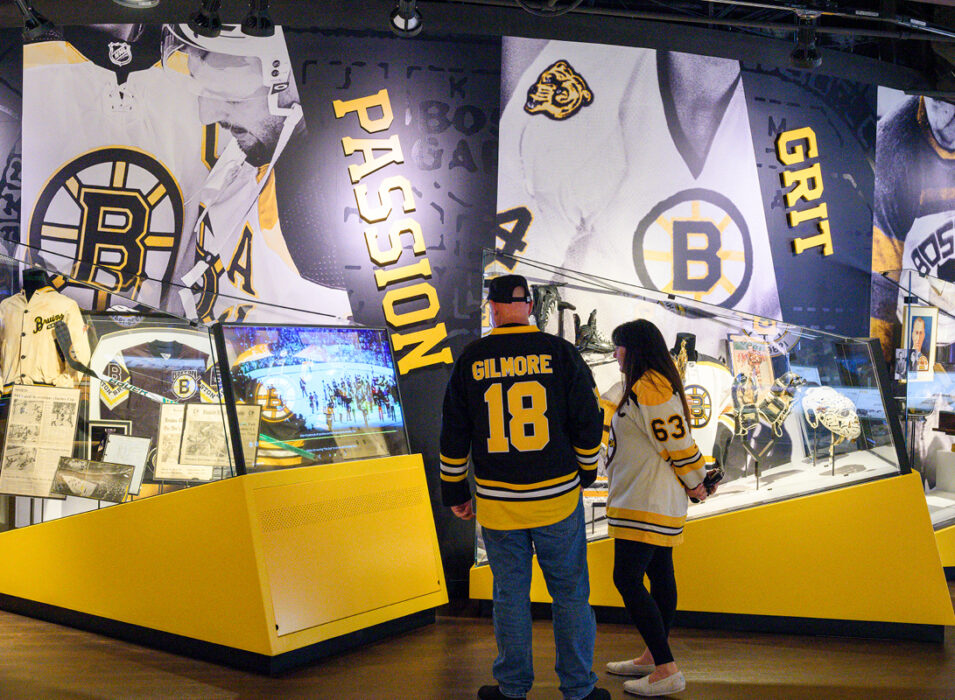
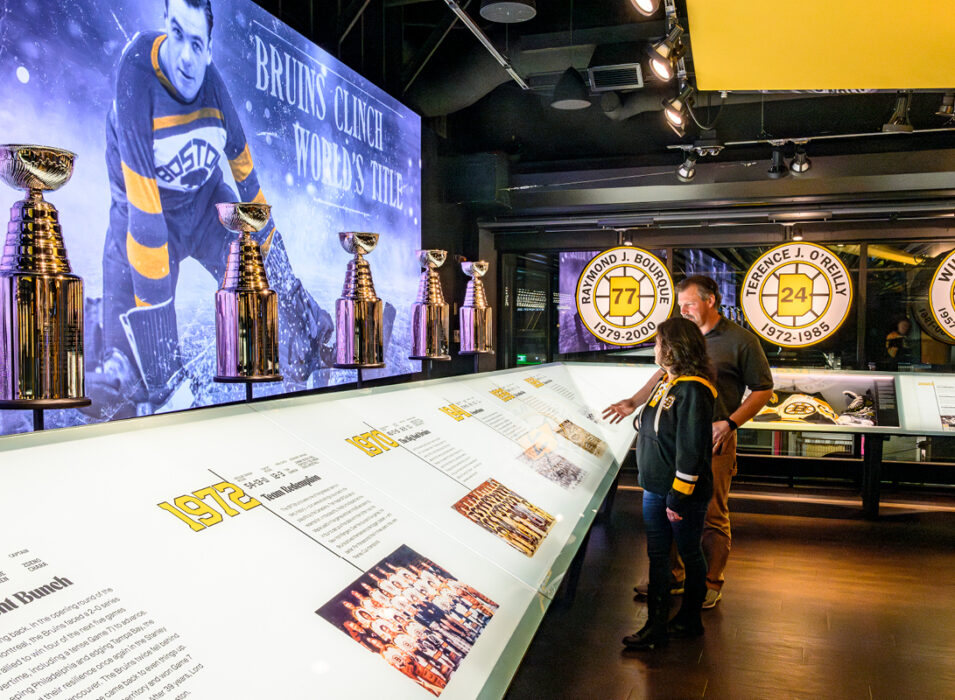
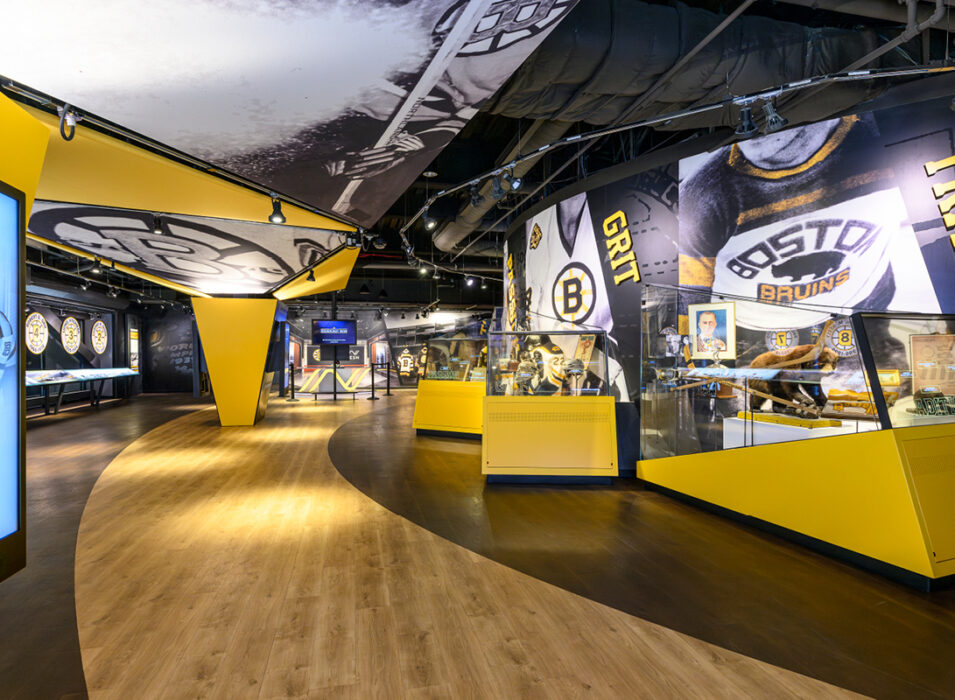
Indoor venues that are already in the epicenter of established entertainment districts still benefit from including non-event visitor draws. Boston’s storied TD Garden enjoys more than 200 events annually and is active on at least 55% of the calendar year, but on those non-event days, The Sports Museum and Boston Bruins Heritage Hall still draw fans. Heritage Hall is an immersive, interactive Bruins history experience on the second level of TD Garden, designed as part of the team’s centennial celebration, but its continued high attendance numbers are a testament to The Hall’s staying power as a yearly attraction.
The venues that succeed as 365-day experiences are the ones where heritage, technology and architecture are treated as a single design opportunity from day one. Heritage exhibits now integrate themes of science, math, personal histories, politics, and great moments in sports, topics that resonate with fans and reveal the far-reaching effects sports have always had on defining our cultures. That is the work CambridgeSeven continues to do for sports clients nationwide.
In The News
Sports Museums: Lessons Off the Field
Modern sports museums and exhibits are moving beyond the game to highlight academic subjects such as physics, women's studies and history within their experiences.
View Post
Evolution of the Sports Museum: Exhibits off Limits No More
A timeline look at how sports museums have evolved over the past four decades with technology and cultural shifts.
View Post