CambridgeSeven converts historic Boston office building into all-electric, fossil fuel-free workplace
The Architect's Newspaper - August 13, 2026

In 2023 Boston Mayor Michelle Wu issued an executive order banning fossil fuels in buildings owned by the municipality, making it the first major U.S. city to do so.
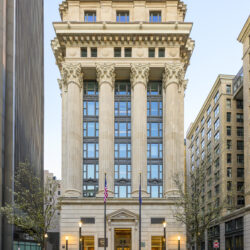
As part of the effort to curb carbon emissions, a historic building owned by the city of Boston has been converted into an all-electric, fossil fuel free workplace by CambridgeSeven.
Building Conservation Associates served as historic preservation consultant.
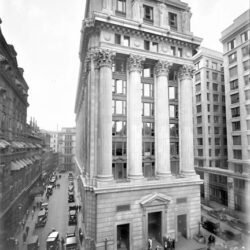
CambridgeSeven said that 89 percent of the original limestone, brick, and cast stone structure from 1912 was preserved.
At the same time its systems were fully electrified to meet the city’s net zero emissions goals, making it one of Boston’s first “near-net-zero civic buildings,” the architects said.


The building at 26 Court Street was completed in 1912 and designed by Edward T. P. Graham. The site is near Government Center, home to Boston City Hall.
The building’s land parcel at 26 Court Street has been owned by the city since 1635, making it Boston’s oldest continuously city-owned property.
Today the building is a workplace for the City of Boston; it houses the Mayor’s Offices for Housing and Climate Resiliency, and other departments.

The building measures 175,000 square feet and rises 11 stories. It has 3 levels of below-grade basement space.
During the five-year renovation process, CambridgeSeven adhered to National Park Service Guidelines to ensure the continued integrity of its core and shell.
The building’s Neoclassical Revival facade, namely its cornices and stone ornamentation, was meticulously restored.
Historic entrance doors on the north facade were recreated “through contemporary interpretations of the original design,” CambridgeSeven said.


New high-performance windows were installed and building systems were modernized. The lobby was “reimagined” for better performance.
A new transformer vault within the building replaced older infrastructure previously used for coal-fired boilers.
In the office levels, CambridgeSeven specified exposed, original riveted steel columns and deployed durable materials such as wood accents and terrazzo flooring.
The sidewalk beyond 26 Court Street was widened to make for a “universally accessible plaza” replete with EV charging stations, bike racks, and flag poles.

Historic granite slabs were incorporated into the redesigned plaza, as well as accessible ramps.
Stefanie Greenfield, a CambridgeSeven principal, said the project “stands as a testament to the balance of preservation and modernization within one of Boston’s iconic buildings.”
“Today, it offers an environmentally resilient, elegant, and welcoming workplace for a new generation of Boston’s civic workforce,” Greenfield added.