How to Adapt: Transforming Historic Architecture for Net-Zero
Our case study of 26 Court Street, presented at Greenbuild Los Angeles, showcases how to adapt historic and aged buildings for modern needs.
View Post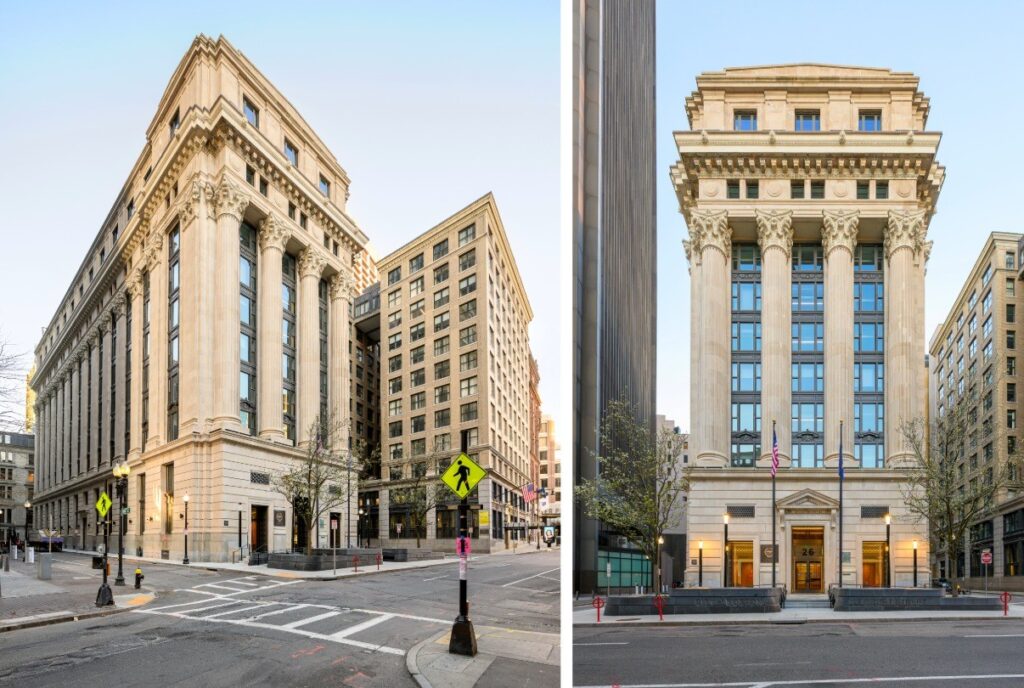
Bridging civic history with modern innovation, CambridgeSeven has announced the completion of a five-year renovation plan for 26 Court Street in downtown Boston. Home to numerous Boston City agencies since its construction in 1912, the site has also witnessed many pivotal moments in Boston’s history that predate the building itself. Working with the City of Boston, CambridgeSeven meticulously restored the building’s exterior facade and transformed the interiors into a modern, fossil fuel-free municipal office building. The renovation fulfills the City’s vision to achieve the highest standards in sustainable design, while serving as a reimagined workspace welcoming both city employees and the public.
The property known today as 26 Court Street is the oldest plot of land consecutively owned by the City of Boston with records dating back to 1635. The site first served as Boston’s Old Prison, which notably housed the 17th-century English pirate, Captain William Kidd in 1699 before he was sent back to England to be tried and ultimately executed.
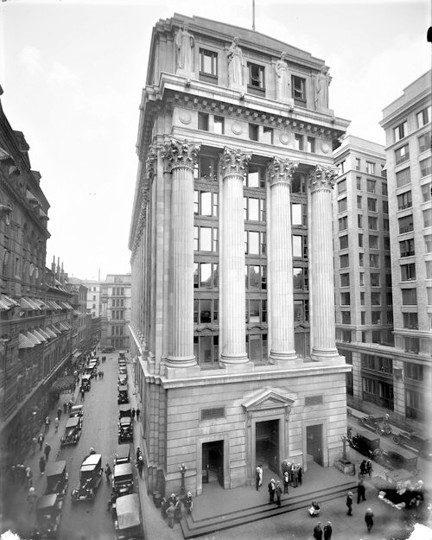
In 1833, the Boston Courthouse, a granite building designed by Solomon Willard in the Greek Revival style, replaced the prison and played a vital role in many fugitive slave cases, including as the site of the successful rescue of Shadrach Minkins from being returned to slavery in 1851, before being demolished in 1909.
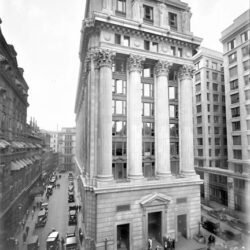
What followed was the construction of the 1912 building, commissioned by the City to serve as the City Hall Annex. Designed by architect Edward TP Graham, the limestone and granite building functioned as the Boston City Hall Annex until 1969, when it became the headquarters of the Boston School Department, which recently relocated.
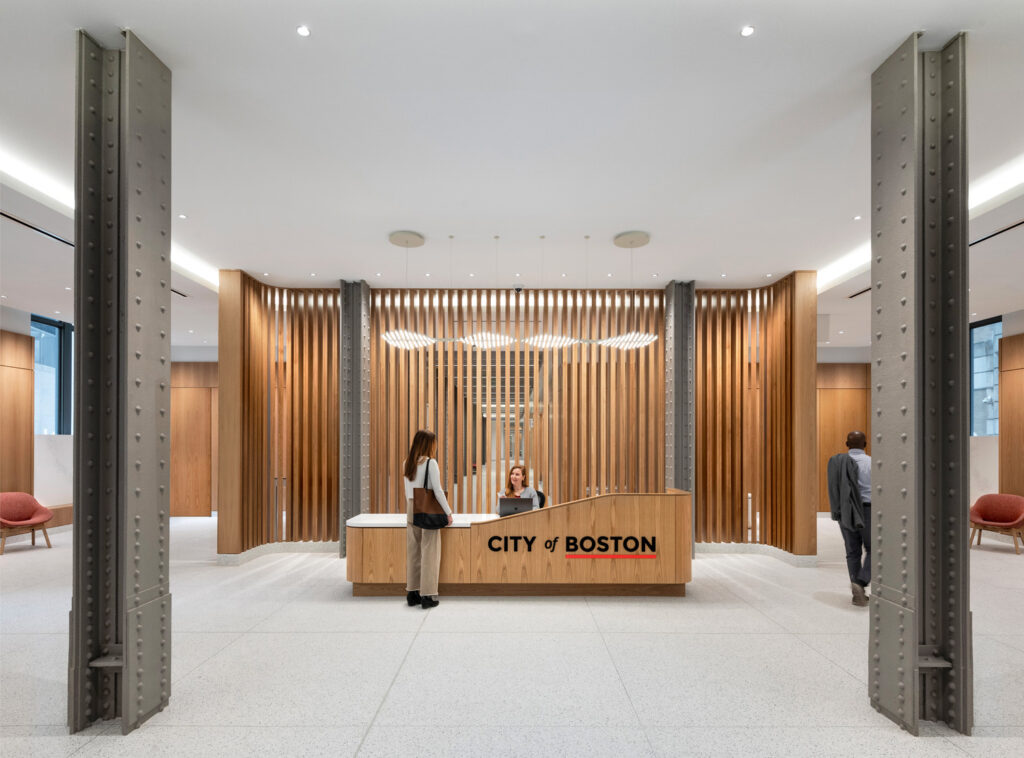
The building now offers beautiful and vibrant workspaces for various city departments including the Public Facilities Department; Mayor’s Office of Housing (MOH); Office of Economic Opportunity and Inclusion, Environment, Energy and Open Space; Mayor’s Office of Art and Culture; Office of Food Justice; Office of Historic Preservation; Veterans Affairs; and Human Resources. The new 26 Court Street additionally serves as a bridge to the local community with welcoming public spaces on the ground floor for the general public to engage with city services. The 175,000 sq. ft. project comprises 11 stories of office and meeting space, a reimagined lobby, and newly expanded streetscape that offers a safe and accessible pedestrian experience along with EV charging stations and bike racks.
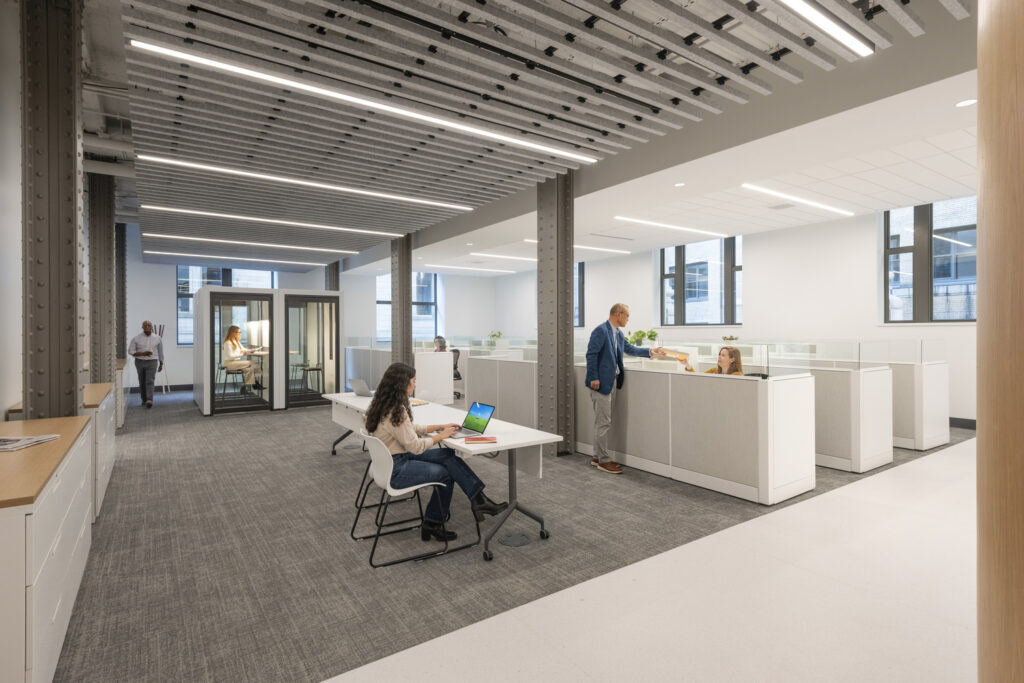
While working to preserve the architectural integrity of the building, CambridgeSeven retrofitted the historic building with new energy parameters to maximize its energy efficiency and not only meet, but exceed, the city’s sustainability goals.
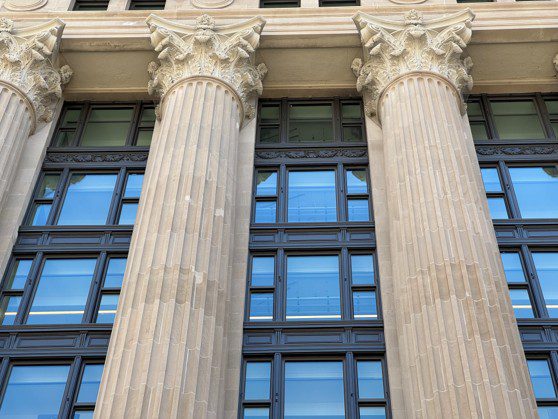
They also rigorously followed the National Park Service Guidelines to restore the building’s exterior. Its Neo-Classical Revival facades, cornices, and stone ornamentation were meticulously restored, and the original doors were repurposed as monumental features in the entry portal. Additionally, all of the existing windows were replaced with energy efficient glazing in the restored historic cast iron frames in order to modernize the building while preserving the ornamental frames.
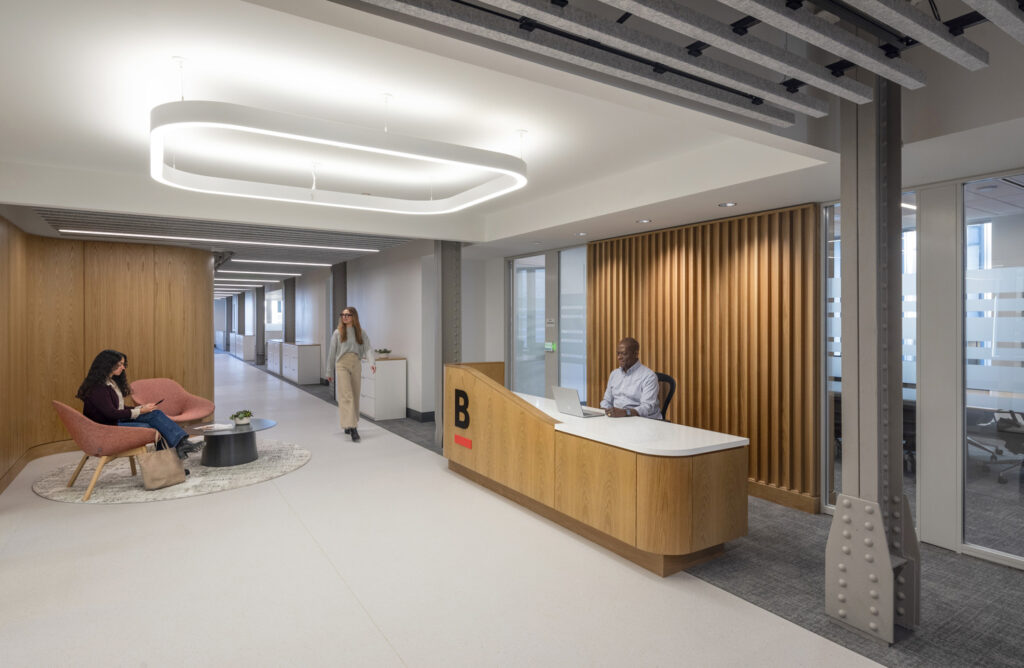
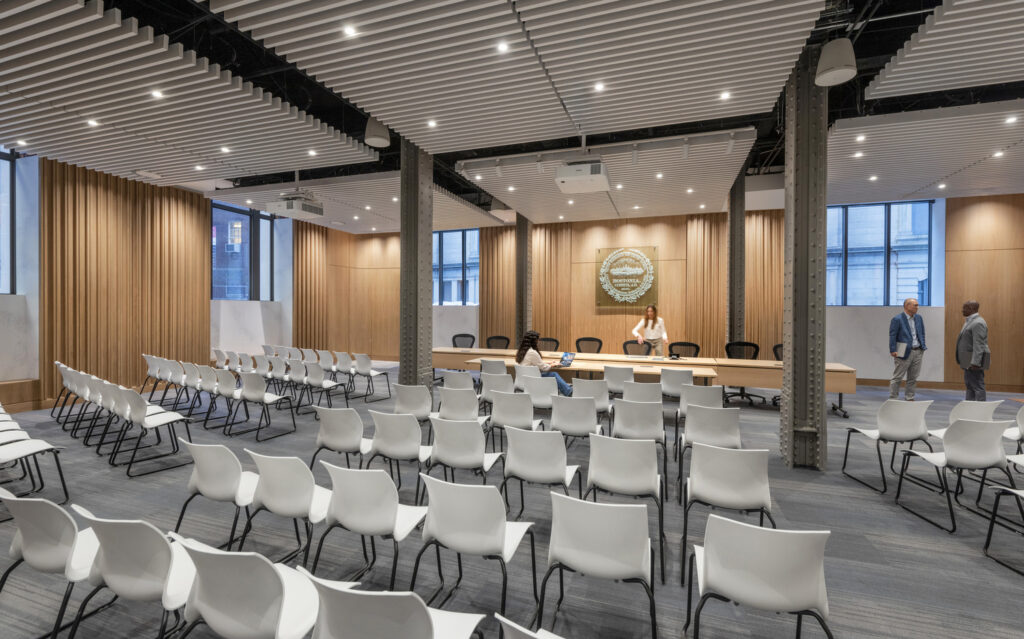
Seamlessly blending the old with the new, a significant part of the modernization effort was the reconstruction of the plaza on Court Street to create a welcoming and universally-accessible approach to a new lobby that re-establishes the main entrance. The ground floor offers a dynamic mix of spaces that welcome the public, including a gallery corridor off the main lobby connecting to the Boston Home Center, the Public Bid Room, and the Public Meeting Room, each of which are equipped with state-of-the-art amenities and technology, as well as flexible space to accommodate art openings, live music, and pop-up performances.
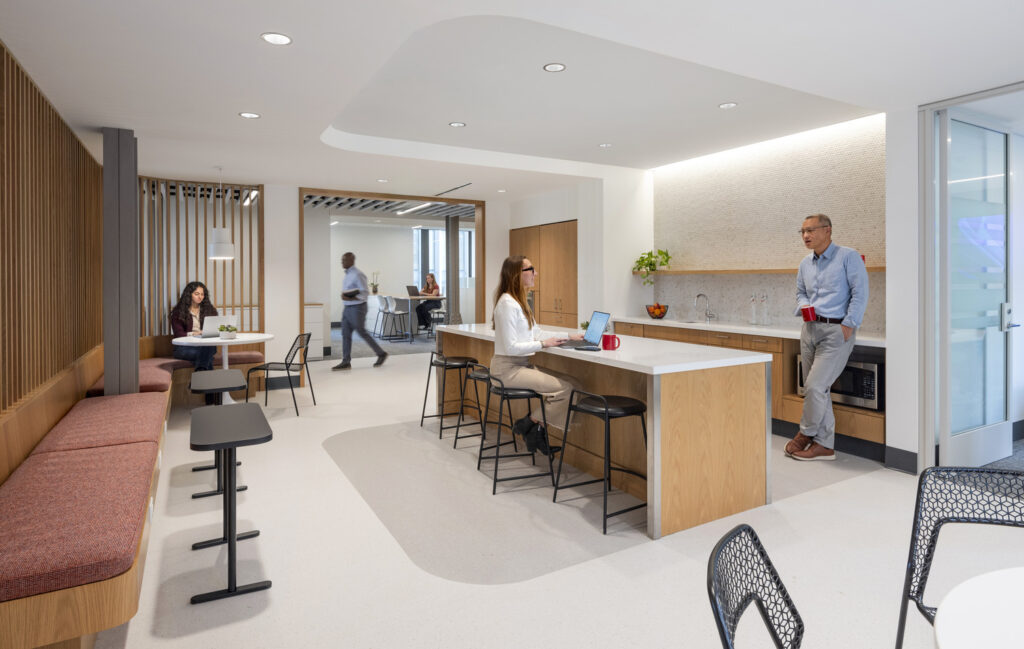
The upper floors serve as reimagined office space for the City of Boston, designed to inspire Boston pride and foster collaboration among employees and departments. CambridgeSeven’s design incorporates durable materials including wood walls and terrazzo flooring and exposes the building’s original steel columns thus balancing historic details with a contemporary, biophilic material palette.
The renovation process also allowed for the building to be transformed into a sustainable structure, supporting the city’s environmental goals and NetZero commitment. On track for a LEED Platinum certification, 26 Court Street is now an all-electric, fossil-fuel free building that has reduced the original structure’s emissions through new windows, airtight insulation, and sustainable mechanical systems. By restoring the facade and reusing the existing building structure, the project achieved a 70% reduction in embodied carbon dioxide emissions compared with new construction.
“We were inspired by the historic integrity of this remarkable building and its context in Boston,” said Stefanie Greenfield, AIA, Principal at CambridgeSeven. “With all our preservation projects, we work to celebrate the historic building while integrating new architecture to create a dialogue between past and present. Most importantly for this project, our goal was to design a modern office interior space to serve and inspire Boston’s next generation of talent and welcome them to work each day.”
Our case study of 26 Court Street, presented at Greenbuild Los Angeles, showcases how to adapt historic and aged buildings for modern needs.
View Post
CoStar - July 9, 2025
It may be one of the tallest buildings in Boston, but the architects behind the Four Seasons Hotel and Private Residences set out to design a structure that respected historic neighbors.
View Post